Cold fermentation, cold storage
Yeast & Fermentation
Erlangen beer is bottom-fermented. Bottom-fermenting yeast works at low temperatures, settles at the bottom of the vessel after fermentation, and delivers a clean, quiet aroma without fruity esters. This yeast suits the coolness of the hill better than any other.
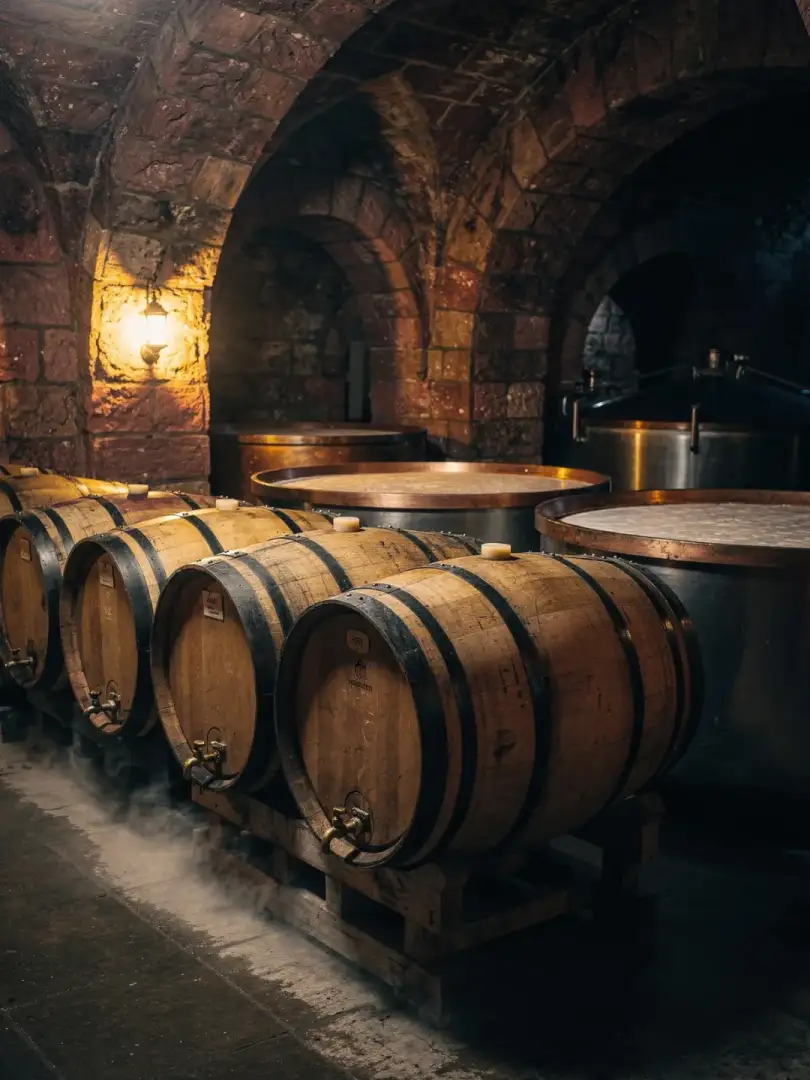
After primary fermentation comes lagering, and that's what built Erlangen's reputation. The young beer matured in the sandstone cellars of the Burgberg at around 8°C (46°F) for weeks to months, cool and undisturbed. During this time it clears naturally, rounds out, and absorbs carbonation that comes through soft and fine.
Pure-culture propagation of bottom-fermenting yeast only became possible in 1883, when Emil Christian Hansen isolated the first pure yeast strain at the Carlsberg laboratory. Before that, brewers kept their yeast alive by passing it along from batch to batch. Conditions in the Erlangen cellars were so favorable that the strain stayed stable across generations.
Carl von Linde's refrigeration machine changed everything. Suddenly, any brewery could store its beer cold year-round, even without rock cellars or natural ice. Erlangen's locational advantage in beer exports shrank, and other brewing cities began to rise. Whether that alone explains the decline of the small breweries remains a matter of opinion.
What is a Kellerbier? A beer that isn't filtered after lagering. It stays naturally cloudy, with yeast held in suspension, giving it a somewhat rounder, breadier character. According to the BJCP, Kellerbier isn't a style in its own right but a base style, brewed like a Helles, Märzen, or Pilsner and simply bottled unfiltered.