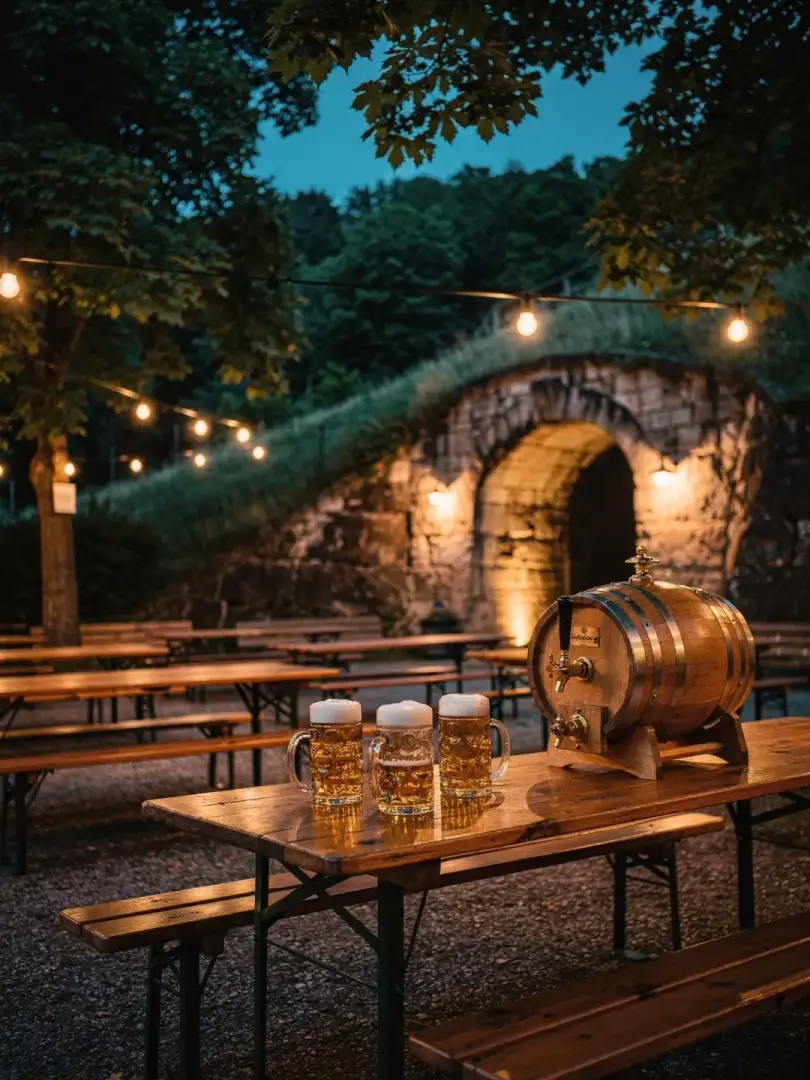
Maßkrug in the chestnut shade
Tasting
What does beer from the Erlangen Berg taste like? Round, soft, and cool: malt sweetness up front, a touch of bread crust in the middle, and a dry, lightly bitter finish. When well-aged, it shows no harshness, and fruit or spice notes are hard to find.
Three cellars serve as prime examples. Entla's Keller has belonged to the Engelhardt family since 1950. Since 1990, the landlord has commissioned a special Maßkrug with a changing design for each Bergkirchweih. The Steinbach-Keller commemorates the Steinbach brewery, which acquired the site in 1861 and brewed there until 1923. The Henninger Keller is the largest of the rock cellars.
Kitzmann is also part of the picture, even though the brewery has no longer brewed in Erlangen since 2018. The Kulmbacher brewery took over the brand, and production moved to Kulmbach. So anyone drinking a beer under that name today is drinking an Erlangen name with Kulmbach origins. Which beers are poured in which cellar changes depending on the landlord and the year.
On the Berg, beer is served in the Maßkrug, a thick-walled vessel holding one liter. The stoneware mug keeps the beer cool for longer, and the handle keeps your hand from warming it. In restaurants, you're more likely to get a smaller glass, a 0.5-liter mug, or a tulip glass.
The ideal serving temperature is between 7 and 9°C (45–48°F), close to cellar temperature. Too cold, and the malt disappears; too warm, and the freshness fades. When pouring, the rule is: tilt the mug under the tap, then straighten it up so a firm but not overly tall head forms.