Sandstone and ice
Water & Soil
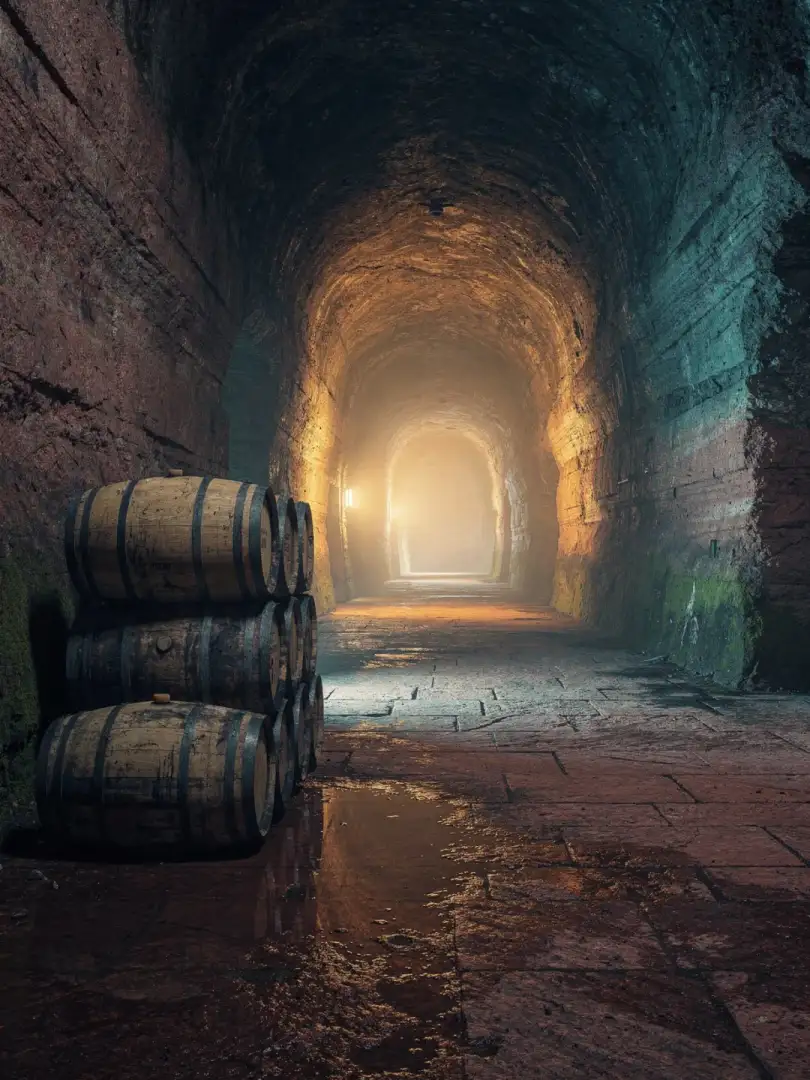
What makes the Erlangen Burgberg a beer cellar? The hill is made of sandstone, which is easy to hollow out. Where quarries once stood, brewers dug tunnels into the rock, eventually creating a labyrinth of about 21 kilometers in total length spread across 16 cellars in the Kellerviertel.
Without any additional cooling, these tunnels stay at around 8°C (46°F) year-round. That consistency was exactly what mattered: beer meant to cold-ferment and rest for a long time needs steady coolness. The rock dampens summer heat as well as winter frost, sparing the casks from heat waves or sudden temperature swings.
In winter, natural ice lent a hand. Once the ponds had frozen to a thickness of at least 30 centimeters, ice cutters sawed out slabs and cut them into blocks, roughly 60 by 20 by 110 centimeters. The blocks were carried down into the cellars, where they kept the beer cool through the summer.
The largest cellar is considered to be the Henninger Keller, dating from 1884. It was the only one built as a tunnel with a north entrance, which created airflow, and is said to stretch 861 meters. Old plans and local history confirm that a rock cellar belonging to the Henninger Reifbräu once stood there.
There are no documented hardness values for Erlangen's brewing water, so no figures are given here. What really mattered was the ground itself: chestnut trees now grow above the cellars, their shade sparing the beer gardens from the May heat. Their roots reach into the same rock that keeps the beer cool below.