Glashütte & Silver Mountains
Region & History
Wernesgrüner is considered Saxony's oldest still-operating brewery, and its story begins in the forest. In 1436, the Schorer brothers, a family of glassmakers, were granted the right to operate a glassworks near Wernesgrün. Such a privilege back then also included brewing and tavern rights.
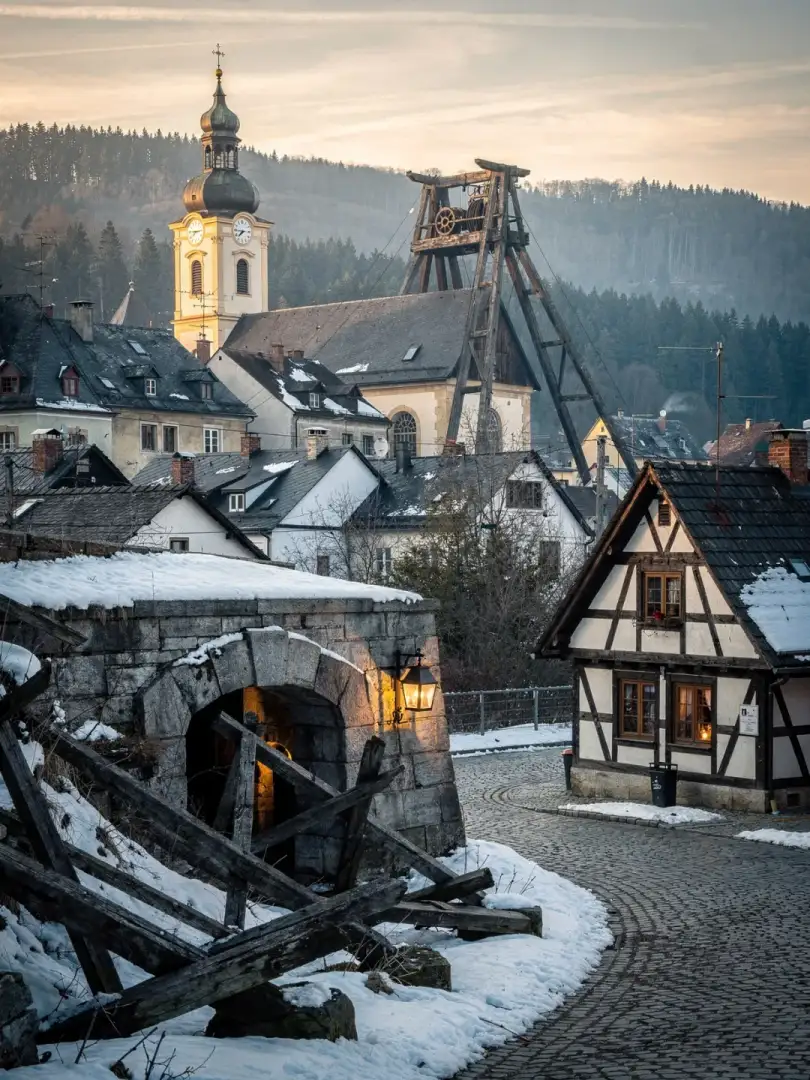
In the Erzgebirge, mining has shaped life for centuries. Silver has been mined here since the 12th century, later joined by tin and other ores, and towns grew up around the mines. Anyone coming out of the shaft after a shift wanted something to drink, and brewing was part of everyday life in the mining towns.
Industry wrote the next chapter. In Plauen, the Aktienbrauverein im Syratal was founded on October 23, 1857, which became today's Sternquell brewery, and the Sternquell brand name has existed since 1934.
In the Chemnitz district of Einsiedel, machine builder Emil Schwalbe opened a private brewery on August 29, 1885. It was meant to produce 5,000 hectoliters a year, or 500,000 liters. Ten years later, capacity had grown tenfold. In 1903 it became a joint-stock company, and in 1972 it passed into state ownership.
In the GDR, the Wernesgrüner operations were expropriated and combined into the VEB Exportbierbrauerei Wernesgrün. The Pilsner from there was considered a sharply bitter specialty. After 1990, the three houses went their separate ways: Sternquell was re-established as a GmbH, Einsiedler followed suit in 1991, Wernesgrüner joined the Bitburger Braugruppe in 2002, and has belonged to Carlsberg Deutschland since January 1, 2021.
There is no EU protected designation of origin for these beers. No Saxon brewery appears in the European beer register, not even Wernesgrüner. The good reputation of the three houses rests on their brands.