Gneiss & Deep Springs
Water & Soil
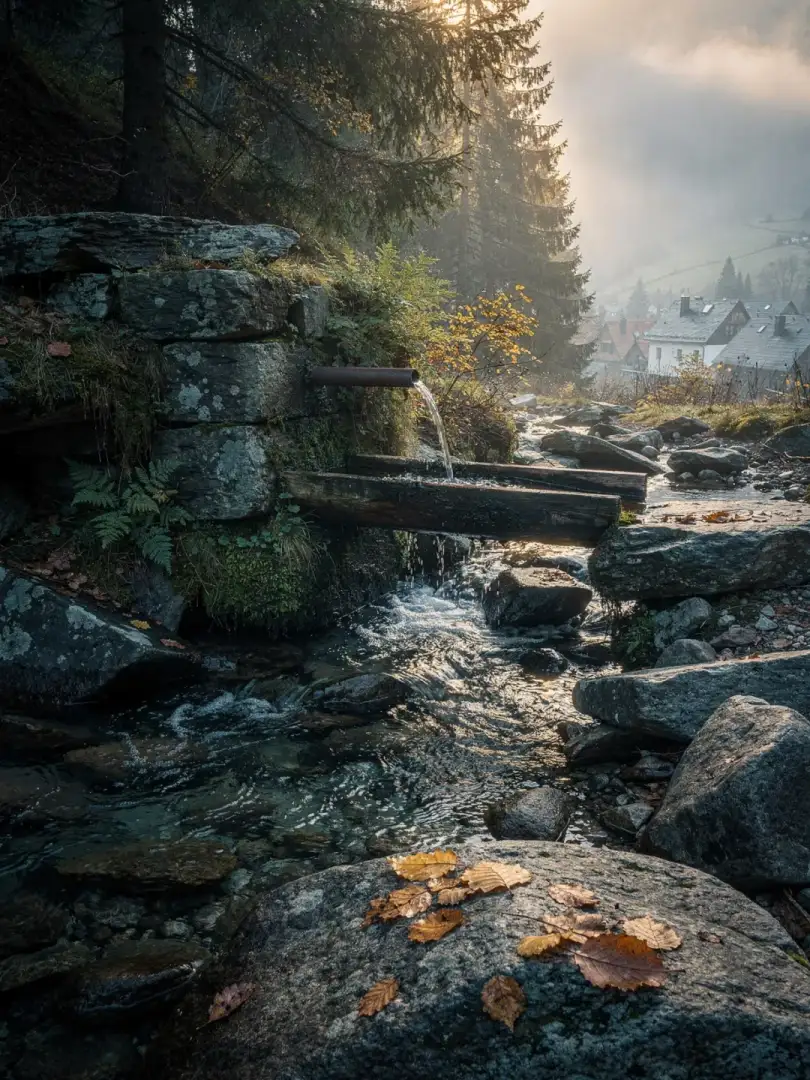
How soft is the water in the Erzgebirge, and what does it do to the beer? The bedrock here is mostly gneiss and granite, while the Vogtland has slate. These are hard, mineral-poor rocks that leave little lime in the rainwater as it seeps downward.
Wernesgrüner states that its brewing water comes from clear deep springs in the Erzgebirge/Vogtland Nature Park. No reliable measurements for the region's brewing water are available, so deliberately no figures are given here.
What soft water does in the glass can be explained in general terms. The hop bitterness comes through clearer and finer, not coarse or fuzzy. That's exactly what brewers look for in a Pilsner. Hard water with a lot of carbonate, on the other hand, suits dark beers, since it buffers the acidity of roasted malts.
Today, most breweries treat their water anyway. They remove salts or add specific ones so that each brew turns out consistently. The soil provides the starting point, and the brewmaster takes care of the rest. A brewer aiming to make Pilsner therefore doesn't start at the tap, but with the question of how much hardness the water brings and what needs adjusting.
The climate helps too. In these highlands, it stays cool for long stretches, winters often bring snow, and cellars hold their temperature without much technology. This benefited brewers before refrigeration existed. Sternquell still sits in a valley today, the Syratal, at its original 1857 site.