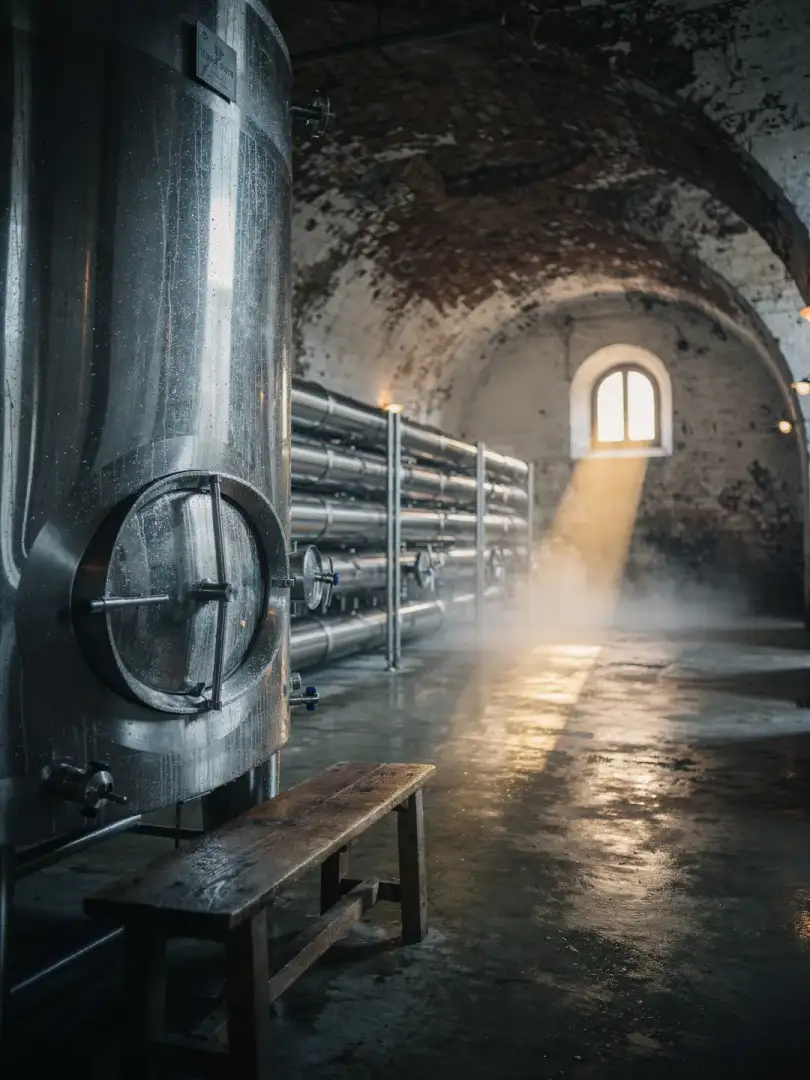
Cold Fermentation, Cold Storage
Yeast & Fermentation
Is Pilsner top- or bottom-fermented? Bottom-fermented. The yeast works at cool temperatures, sinks to the bottom at the end, and gives the beer a lean, clean taste without fruity notes. This applies equally to Wernesgrüner, Sternquell, and Einsiedler.
The yeast is called Saccharomyces pastorianus, a hybrid of two species. The Dane Emil Christian Hansen isolated the first pure culture of a bottom-fermenting yeast at the Carlsberg laboratory in 1883. Since then, every brewery has been able to work with a consistent strain.
Primary fermentation runs at low temperatures, usually around ten degrees Celsius, and lasts about a week. The young beer is then cold-stored for several weeks. During this time, it clears, the bitterness rounds out, and carbonation binds into the beer.
The word lager comes from this waiting period ('lagern' means to store). In the uplands, cold cellars were once used for this; today, refrigeration does the job. How long each brewery lagers its beer varies, and no specific timeframes for individual brands are given here.
Anyone wanting to know how Pilsner and ale differ finds the answer in the yeast: ale ferments warm and fruity, lager ferments cold and quiet.
After lagering, the beer is filtered to appear clear in the glass. Yeast and sediment remain behind in the filter. Some breweries also offer a Landbier (country-style beer), which tastes heartier and has a bit more body. These beers are made with the same yeast and the same process—only the recipe and lagering time differ in detail.