Pils and Helles
Beer Styles
Pilsner is the leading style of the Erzgebirge and Vogtland. Wernesgrüner calls its most famous beer "Pils Legende," which was considered a sharply bitter specialty in the GDR. Sternquell has also had its Pilsner since the 1960s, and Einsiedler brews one in Chemnitz.
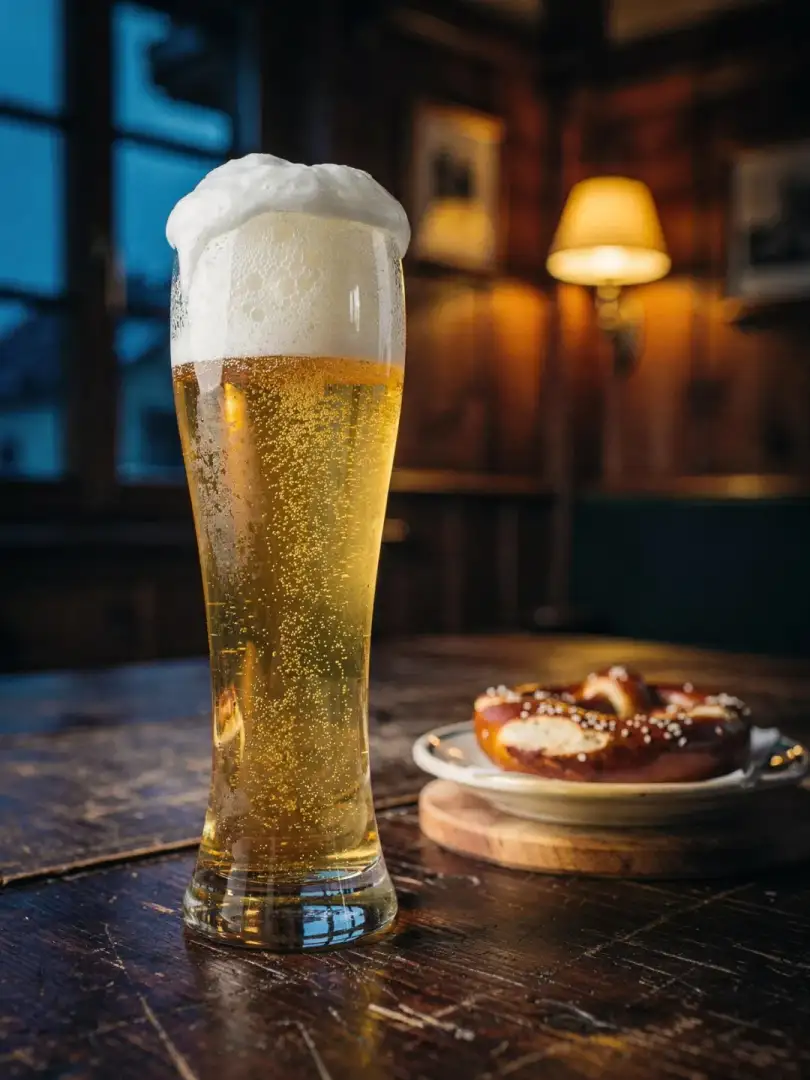
A German Pilsner is pale gold, has a firm white head, and a pronounced bitterness. The aroma suggests grass and herbs, and the finish is dry. It differs from Bohemian Pilsner through more bitterness and less malt sweetness, and the Bohemian style often looks a bit darker and rounder in the glass.
Helles is the milder sibling. It has less hop bitterness, more bready flavor, and is considered the Bavarian counterpart. Wernesgrüner also offers a Helles and a Landbier alongside its Pilsner.
The difference between the two lies in the hops and in the original gravity, meaning the sugar content of the wort before fermentation, measured in degrees Plato—a value that later determines how much alcohol ends up in the beer. With Pilsner, brewers love to debate the right amount of hops; with Helles, it's the body that sparks discussion.
How much alcohol does Pilsner have? A German Pilsner, by style standard, ranges from 4.4 to 5.2 percent. Helles comes in at 4.7 to 5.4 percent. Individual brands may vary, and the value is always printed on the label. Anyone tasting both styles side by side notices the difference from the first sip: Pilsner dries out the mouth, while Helles stays soft and round.
Pils (German)bottom-fermented
- Original gravity
- 11–12.4 °P
- Alcohol
- 4.4–5.2 % vol
- Bitterness
- 22–40 IBU
- Colour
- 4–8 EBC
Pale gold, firm head, pronounced bitterness, dry finish.