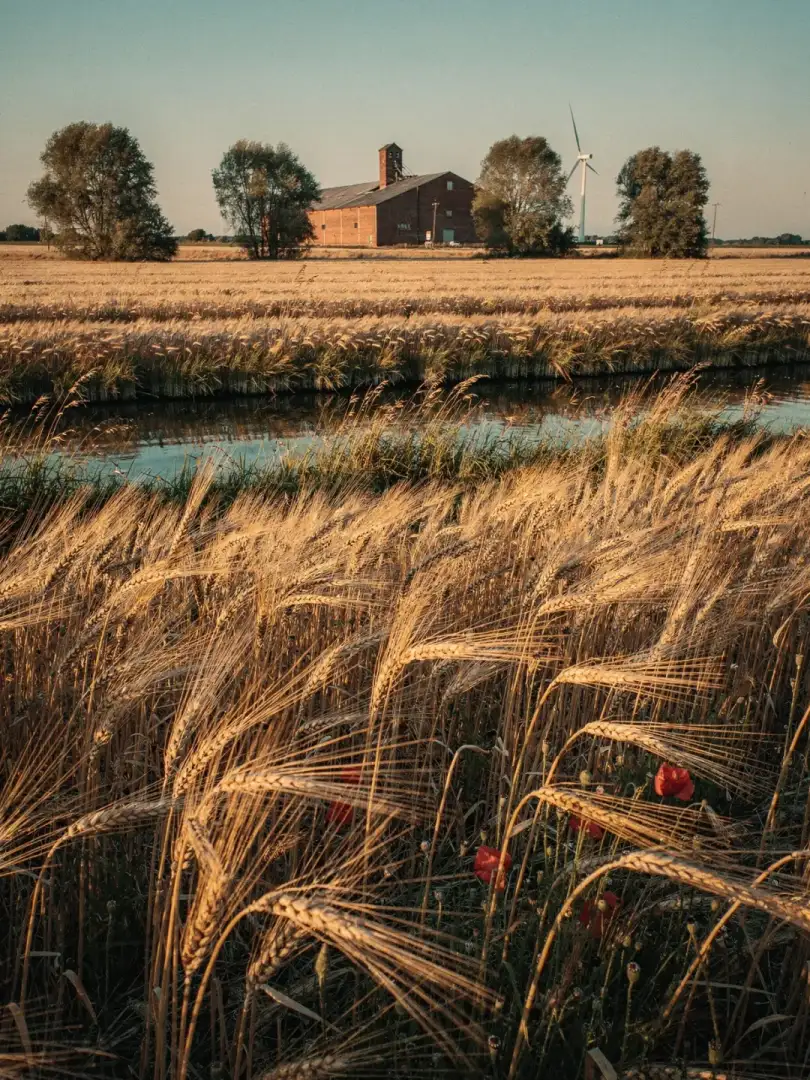
Pale Pilsner malt
Malt & Grain
What malt is Pils brewed from? Pale barley malt, known as Pilsner malt. The barley is germinated and then gently dried, a process called kilning. Because the heat stays low, the malt barely browns, giving the beer a straw-yellow color instead of amber.
Jever Pilsener follows this pattern, and you can see it in the pale color in the glass. Under German law for bottom-fermented beers, only barley malt, hops, yeast, and water may go into the brew. Which maltster supplies the brewery and which barley fields the grain comes from, the brewery doesn't disclose, so we won't make specific claims here.
Barley grows well along the coast and inland, especially on the fertile marsh soils. Marsh soil formed from sea silt and is rich in nutrients, unlike the sandy geest areas and the acidic moorland. Today, the fields of the Jeverland grow mainly maize and rapeseed alongside grain.
The small brewhouses tell a different story. The dark lager from Bagband relies on darker malts, kilned longer and hotter, which give the beer roasty notes without excessive sweetness. A coastal brewery near Werdum brews an unfiltered Pils, a dark beer, and seasonally a wheat beer and a bock. Wheat beer requires wheat malt, which makes this range the counterpart to Pils.
Anyone wanting to taste the malt should try a dark beer alongside the Pils. The Pils brings notes of bread and honey, the dark beer crust and cocoa. That turns an evening of beer drinking into a little malt tutorial, no lab required.