Top and Bottom
Yeast & Fermentation
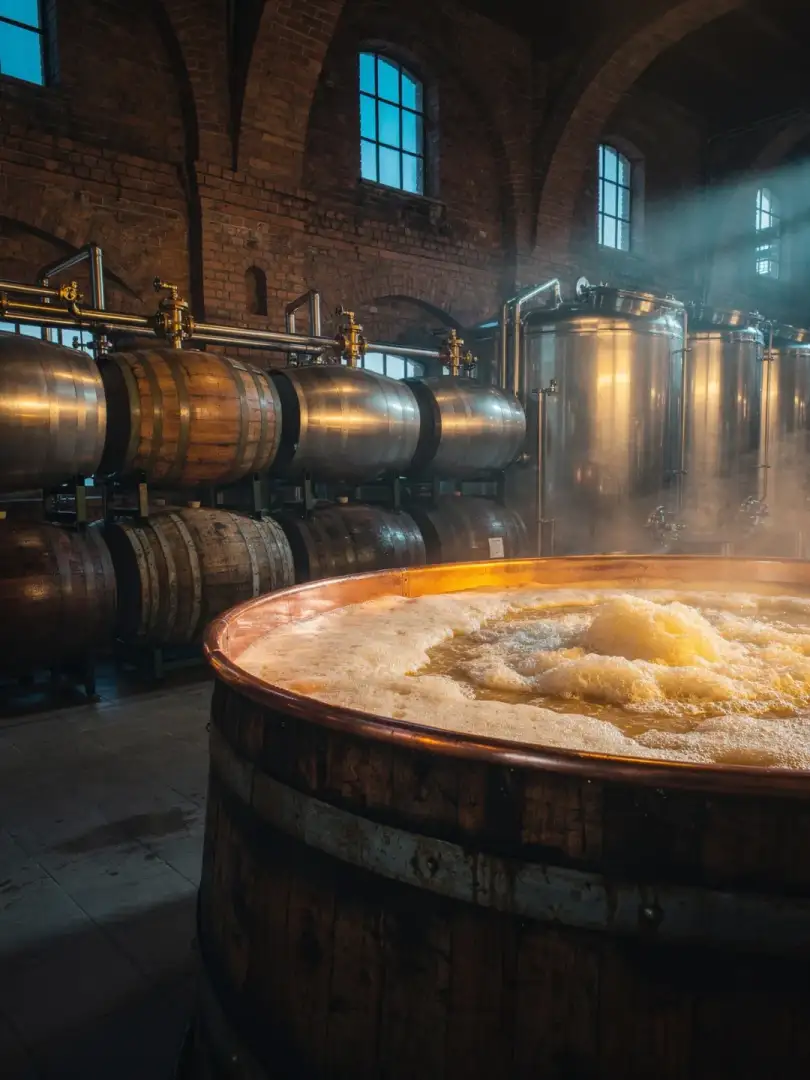
Is Broyhan top- or bottom-fermented? It's top-fermented. The yeast in the beer Cord Broyhan brewed in 1526 gathers at the top of the wort during fermentation and works at around 15 to 22 degrees Celsius, with the wort being the sugary malt liquid from which alcohol is formed.
The Pils from Hannover and Braunschweig, by contrast, is bottom-fermented, meaning it uses yeast that sinks downward and works at 6 to 10 degrees Celsius. This lager yeast is a hybrid of two yeast species, and the first pure culture was successfully isolated by Emil Christian Hansen in Copenhagen in 1883. The beer then lagers cold in tanks for weeks and clarifies.
Because cold is essential to this process, the shift from Broyhan to Pilsener required refrigeration technology and time. This explains why the major breweries of the 19th century built new facilities using steam and ice.
No records survive of the yeast or fermentation methods used for Mumme, so anyone tasting it today can hardly compare it to its medieval ancestor. In top-fermented beers like Broyhan, the yeast character comes through more strongly, with fruity notes like apple or banana, since warm fermentation produces such aromatic compounds. Bottom-fermented beers come across cleaner and leaner, which is exactly the goal with Pils. The Gilde Brauerei has been brewing at the same site on Hildesheimer Straße since 1870, and since then it's mainly the technology around fermentation and lagering that has changed: open vats have given way to closed tanks that allow for precise cooling.