Bitterness from Elsewhere
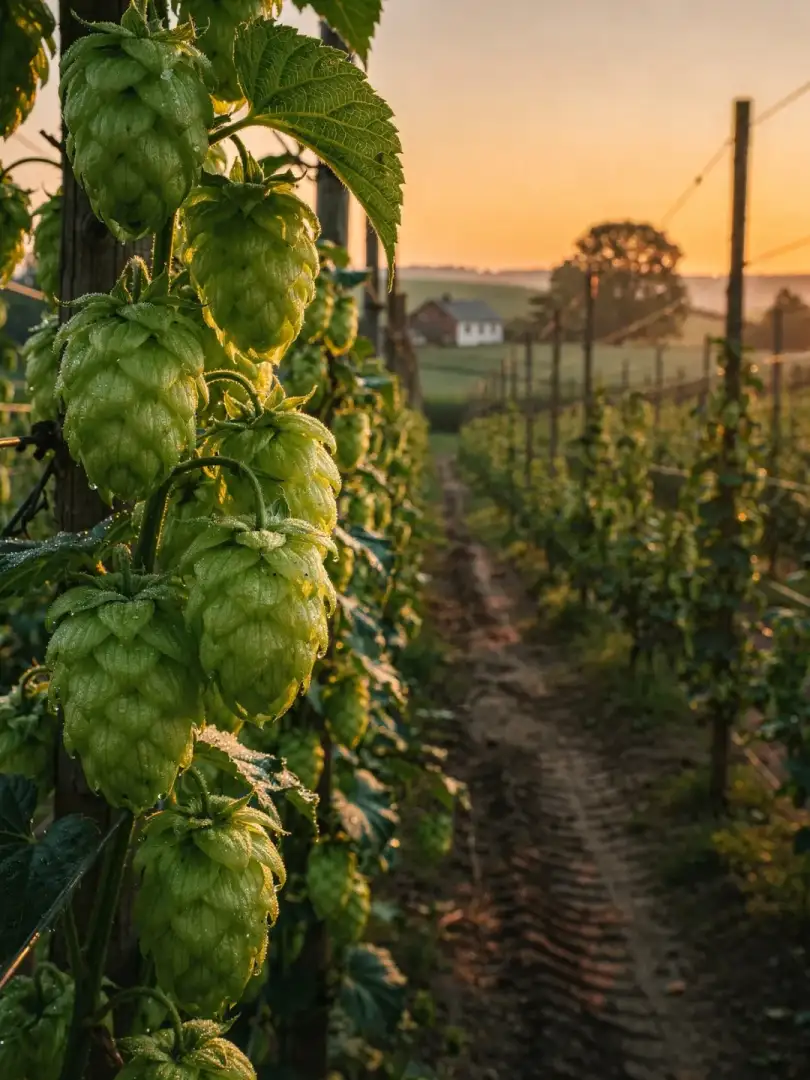
Hops
How bitter is a Pils from Hannover? A German Pils, according to the BJCP competition guidelines, falls between 22 and 40 IBU, a unit that measures bitterness level. The hops used don't grow right on the region's doorstep: no significant hop cultivation is documented in Hannover or Braunschweig.
In 2025, Germany grew hops on 18,962 hectares, of which roughly 17,129 were in the Hallertau, about 83 percent of the total area. The Elbe-Saale region accounts for around 1,550 hectares. Northern brewers therefore buy their hop cones from these major growing regions.
Hops are divided into bittering and aroma varieties. Bittering hops like Magnum or Herkules are added early to the boiling wort and deliver sharpness, while aroma hops like Perle, Tradition, or Hallertauer Mittelfrüh are added late and bring floral, herbal, and spicy notes. Which varieties the region's breweries use is not documented.
For export beers like Braunschweiger Mumme, durability was what mattered most, and that came from alcohol, sugar, and hops. Today's Gilde Pils, by contrast, calls for a fine, clean bitterness that lets the malt body finish dry.
Hops are harvested in August and September: the vines are cut, the cones picked, dried, and often pressed into pellets before reaching the brewery. For beers like Gilde Pilsener or Herrenhäuser Pilsener, bitterness is part of the style, though no label states exactly how strong it is as a number.