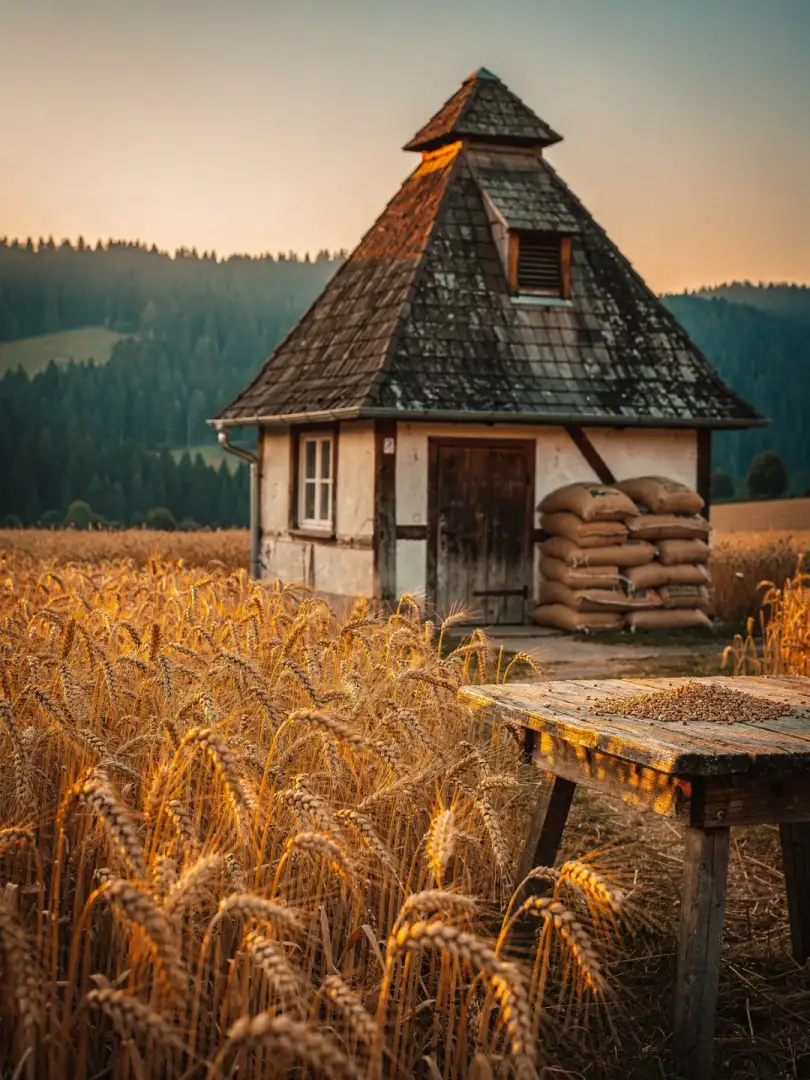
Barley, Wheat, Roasted Malt
Malt & Grain
What malt is Hofer Bier brewed from? In Bavaria, beer is governed by the Reinheitsgebot (Purity Law): barley malt, hops, yeast, and water, with wheat malt replacing barley for top-fermented wheat beer. Sugar is banned in Bavaria even for top-fermented beers, unlike in other German states.
Malt is produced when grain begins to germinate in water, and the brewery halts germination on a heated drying floor called a kiln. How long and how hot the kilning process runs determines the color. Pale Pilsner malt stays light, Munich malt comes out darker, and for black beers, heavily roasted malts are used, evoking bread, coffee, and cocoa.
This range is exactly what Hof's beer portfolio requires, spanning from pale Pils and Export through Kellerbier and Märzen to Dunkel, Bock, and Weizenbock. According to the Genussportal, the alcohol content of Hofer beers ranges from 2.7 to 8 percent ABV.
Weissbier calls for its own malt blend. Wheat provides foam, a soft mouthfeel, and the characteristic fruity notes that top-fermenting yeast then develops further. Scherdel is one of the region's breweries known for its wheat beers.
Which maltster supplies the Hof breweries is not disclosed in public information. Meinel-Bräu states that it uses exclusively raw materials from regional, controlled production, and received the "Qualität aus Bayern" seal from the Association of Medium-Sized Breweries in 1999. This is a claim made by the brewery, not an independently verified fact. Barley and wheat grow in Upper Franconia on the high plateaus surrounding the low mountain ranges.