Jurassic Limestone & the Danube
Water & Soil
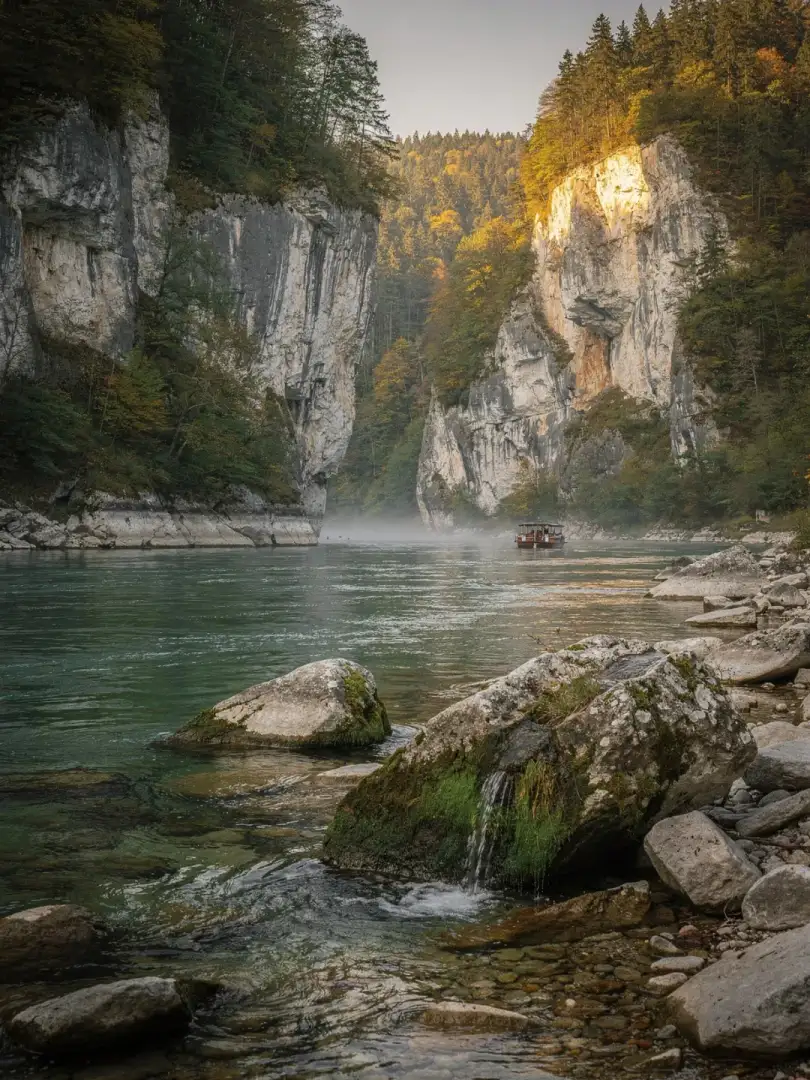
Why is there a monastery with a brewery in this exact spot? The rock holds the answer. Near Kelheim the Danube cuts through the Jura, a limestone landscape, and at the Weltenburger Enge pale cliff walls rise sheer out of the water.
Rain seeps through limestone and dissolves carbonate as it goes. The groundwater here is therefore more mineral-rich than, say, the very soft water of Pilsen. We won't quote a hardness figure for Weltenburg or Kelheim, since no reliable data exists, and it would only be a starting point anyway, as nearly all breweries treat their water today.
What carbonate does in the glass can be explained through dark beer. Roasted malts make the mash acidic, and hard water buffers that acidity. As a result, dark beers taste round and bready rather than sharp and bitter, which is exactly why mineral-rich water was long considered an advantage for Dunkel and Bock.
With pale wheat beer it's the reverse: less carbonate keeps the wort fresh and leaves room for the yeast's aromas to shine.
The terrain also helps with storage. Limestone cellars stay cool in summer, and before refrigeration this was essential for bottom-fermented beers. Monks and brewers along the Danube could brew in the cool months and then store the beer inside the mountain.
Then there's the river as a transport route. Boats still travel from Kelheim through the Danube gorge to Kloster Weltenburg today, and in earlier times grain and barrels made the same journey. From the Befreiungshalle atop the Michelsberg above the town, you can see how the river has carved its way through the limestone.