Cool and Warm
Yeast & Fermentation
Two yeasts define Landshut beer. Helles and Dunkel are bottom-fermented, while Weissbier is top-fermented. The difference lies in the yeast and the warmth: bottom-fermenting yeast works at cooler temperatures and settles at the bottom at the end, while top-fermenting yeast works warmer and rises to the surface.
The bottom-fermented Helles ferments at temperatures in the single digits to low double digits, then lagers cold in the tank for weeks afterward. During this time the beer clears, and harsh secondary aromas fade away. Breweries don't give a consistent exact duration, as it depends on the recipe and the season.
A dedicated Weissbier yeast is used for the top-fermentation of Weissbier. During fermentation it produces esters and phenols, aromatic compounds reminiscent of banana and clove. That's why a Hefeweizen smells so fruity, even though there's no actual fruit in the brew.
Landshuter Brauhaus also offers a Zwick'l. A Zwickelbier is an unfiltered, naturally cloudy cellar-style beer in which the yeast stays in the glass. It tastes rounder and yeastier than a clear, filtered Helles. People like to drink it fresh, since the yeast ages the beer more quickly.
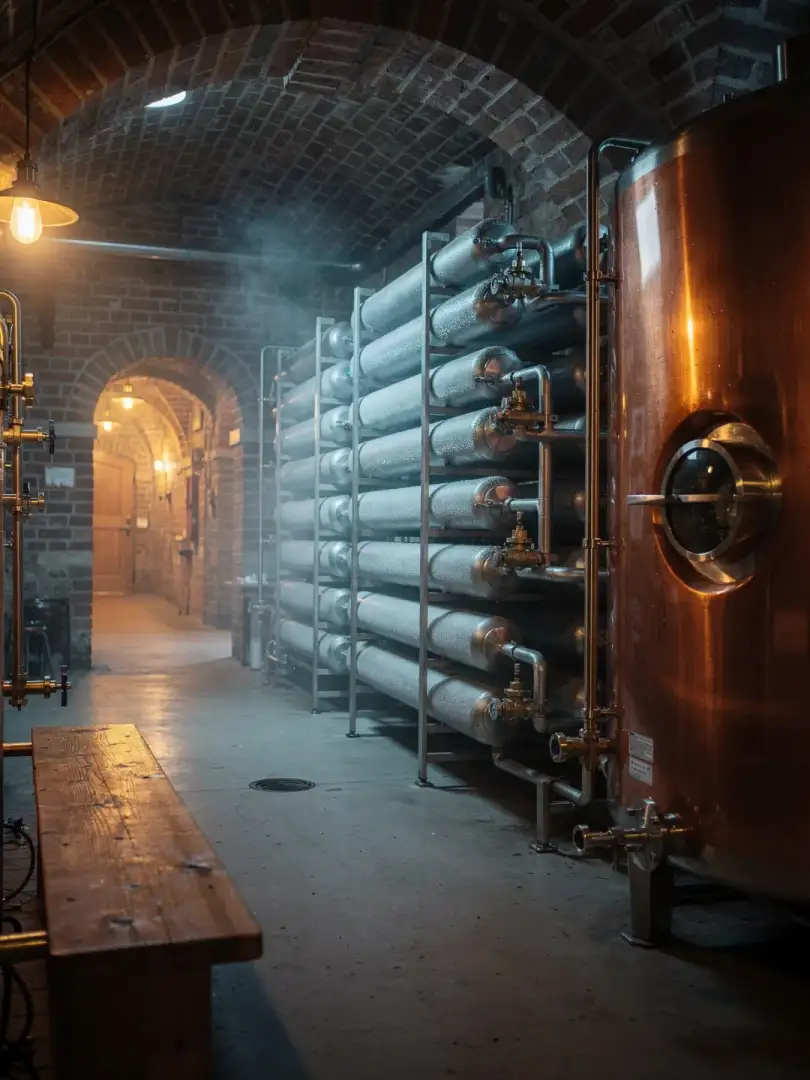
The brewery doesn't intervene during fermentation, only monitoring temperature and time. At both Landshuter Brauhaus and Wittmann, this takes place in a fermentation cellar with tanks where yeast converts sugar into alcohol and carbon dioxide. With the Bio Zwick'l, some of the yeast stays in the beer, which is why it tastes less smooth. After primary fermentation comes maturation, during which the flavors round out.