Glass & Temperature
Tasting
Order a Helles in Landshut and you'll usually get it as a Halbe, that's 0.5 liters, or as a Maß, a full liter. Wittmann Urhell and the Hell from Landshuter Brauhaus are good examples of the style. Both are considered mild, easy-drinking Hellbiers. The blend of bread crust, light sweetness, and delicate hops is typical of Lower Bavaria.
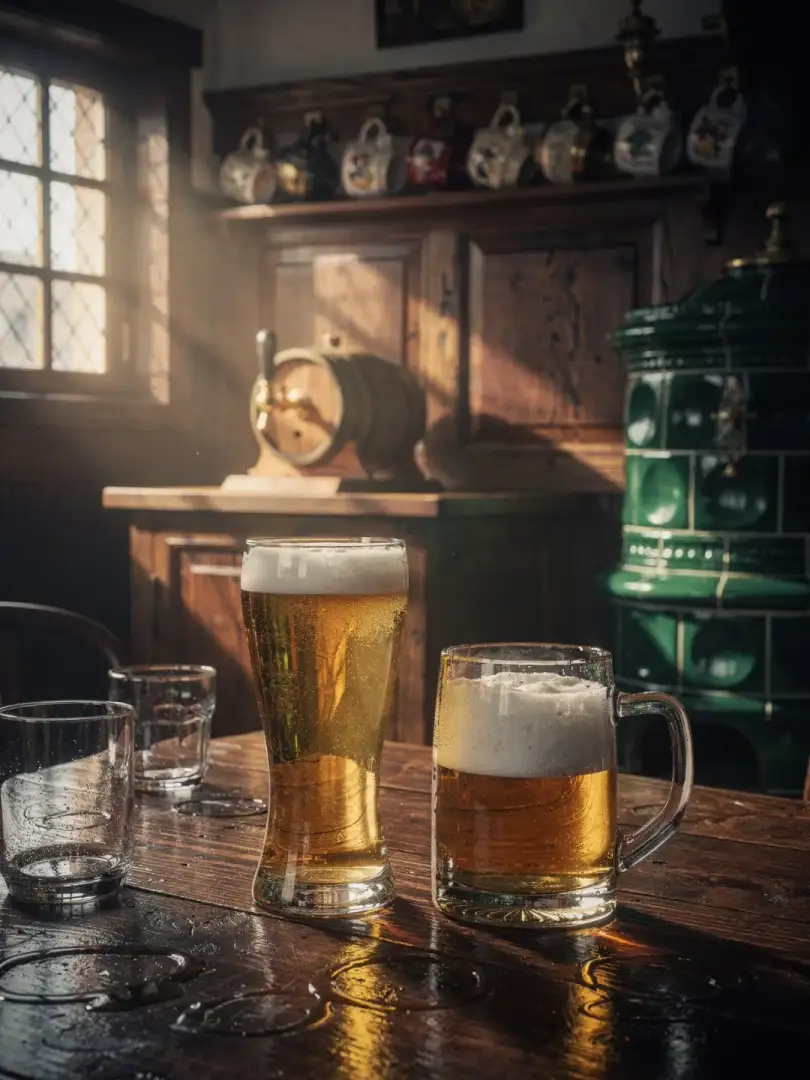
A cylindrical mug or a simple beer glass suits Helles well. The ideal temperature is around 6 to 8°C (43–46°F). Too cold suppresses the malt aroma, too warm makes it feel heavy. The head should be fine-pored and hold for a while.
Weissbier comes in a tall glass that widens toward the top. The shape captures the foam and lets the aromas rise. When pouring, tilt the glass, let the beer run down the side, then straighten it at the end so the head builds up. Swirl the last bit in the bottle to bring the yeast into the glass.
The Bio Zwick'l from Landshuter Brauhaus serves as a good example of the style. It's cloudy with yeast and pairs well with a hearty snack plate. For Weissbier, the same brewery's Bio Hochzeits Weisse is a good pick, said by the brewery to be stronger than an ordinary Weissbier.
To compare beers, take small sips and pay attention to three things: aroma, body, and finish. What matters here is the senses, not the quantity.
As a rule of thumb when pouring a Weissbier, about a third of the bottle should end up as foam. A Hefeweizen can be cloudy, while a Helles should shine clear. Rinse the glasses with cold water before pouring so the head doesn't collapse.