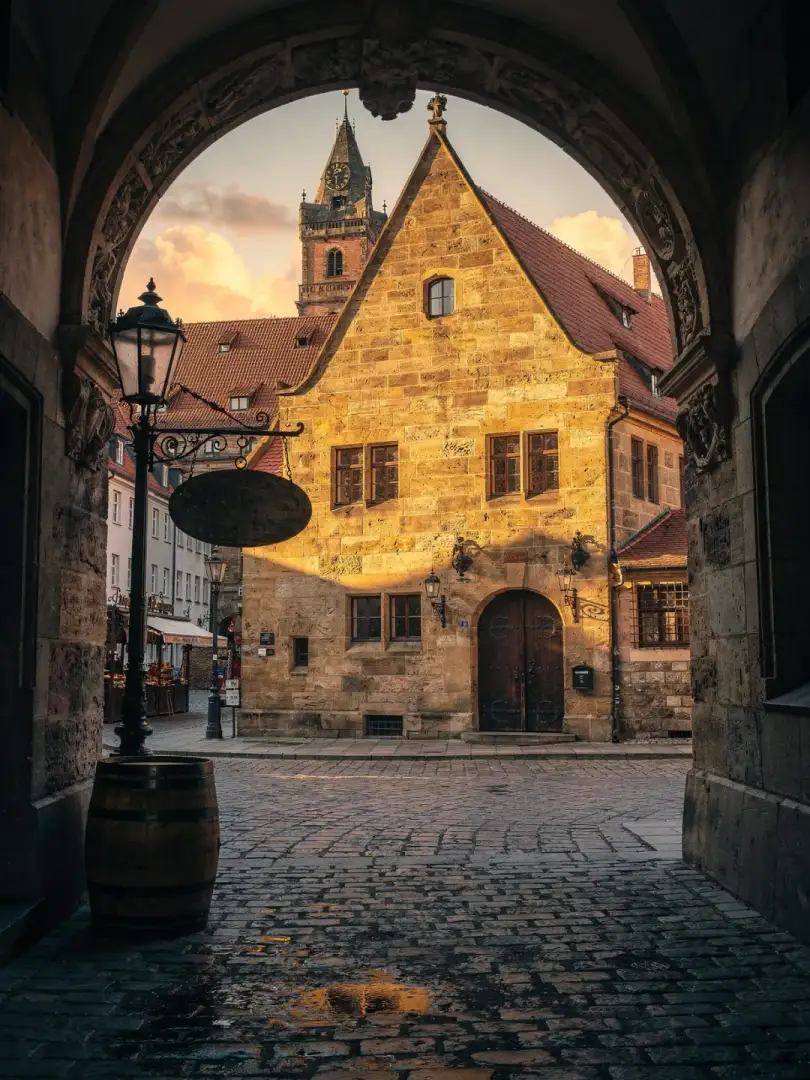
Gose and the Trade Fair City
Region & History
Where does Leipziger Gose come from? The beer originally hails from Goslar in the Harz Mountains, but it has called Leipzig home since 1738. As the story goes, Prince Leopold I of Anhalt-Dessau had it brewed as his personal drink at the Glauzig estate and brought it to Leipzig. That's how the city's history tells it—what happened afterward is far better documented.
The people of Leipzig drank Gose in abundance. According to the city's historical records, there were roughly two dozen Gosenschenken by the mid-19th century, and around 1900 it was the most-drunk beer in the city. Local breweries copied the style because demand outpaced supply.
The largest tavern was built by Carl Cajeri. In 1899 he opened the establishment "Ohne Bedenken" at Menckestraße 5, which later expanded to over three hundred seats indoors plus a beer garden. The name traces back to a waiter who, whenever guests asked if the beer would sit well with them, always answered: "Ohne Bedenken!" ("Without worry!")
Then the tradition broke off. The tavern closed in 1958, and Gose gradually vanished from the city. It wasn't until 1985 that "Ohne Bedenken" reopened, and in 1999 new Gose production began in Leipzig, including at Bayerischer Bahnhof, where a dedicated Gosebrauerei has operated since 2000.
Legally, Gose is a special case. It's not listed in the EU register of protected designations of origin, so its name is unprotected. Because salt and coriander deviate from the Reinheitsgebot (German Purity Law), it requires approval in Germany as a "special beer." Leipzig also remains a classic brewing city in its own right: Ur-Krostitzer, from nearby Krostitz, received its brewing rights in 1534 from Duke Georg the Bearded and today belongs to the Radeberger Group.