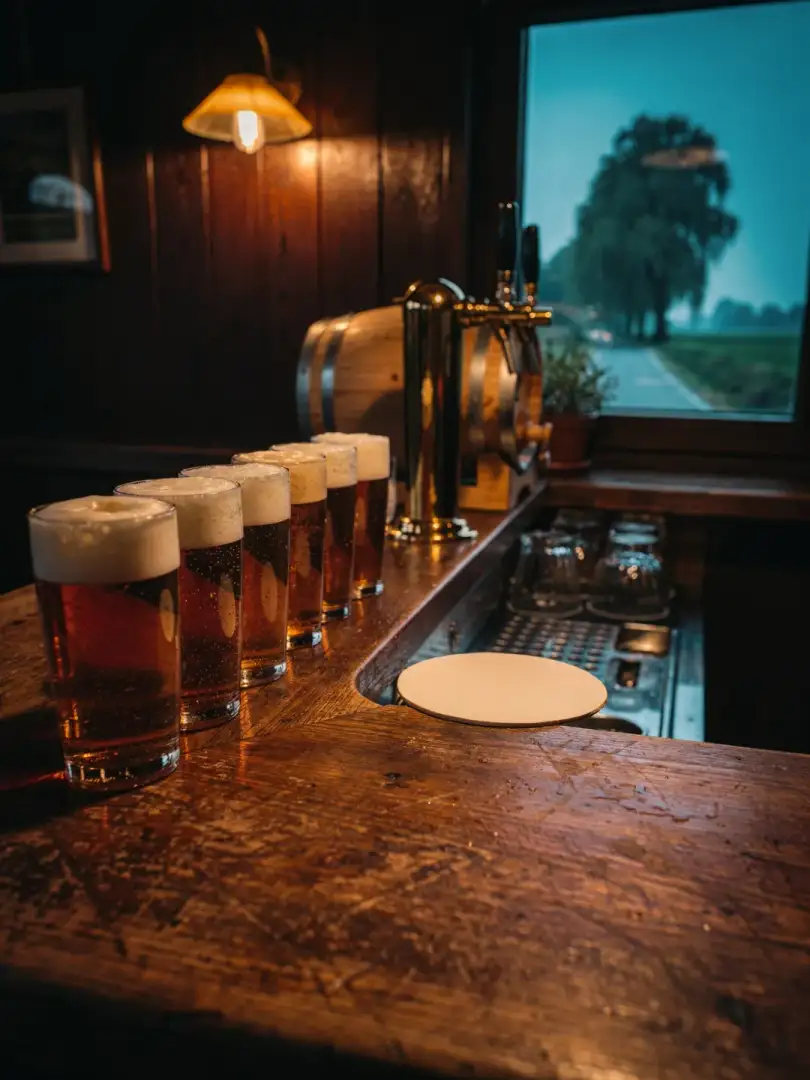
Small Glass and Cask
Tasting
An Altbier from the Lower Rhine smells of bread crust and light caramel. A delicate fruit note joins in, and the head is fine-pored and long-lasting. On the tongue it's medium-bodied, and the bitterness lingers at the end, trailed by a dry finish.
Three breweries make a good comparison. Diebels Alt from Issum represents the brilliantly filtered, widely known Altbier. Bolten's Alt from Korschenbroich is the family-brewery version, and the same brewery's Ur-Alt shows how yeasty and unfiltered it can become. In Krefeld, it's also worth seeking out smaller houses like Gleumes or Königshof and their Altbier.
Altbier is served in a slim, straight-sided glass. The glass usually holds around a quarter liter, kept small so the beer stays cool. A tulip glass would be wrong here; the straight glass holds the head of foam and shows off the color.
Serving temperature is around eight to ten degrees Celsius. Any colder and the malt notes disappear. Any warmer and the bitterness turns broad. When pouring, tilt the glass slightly, let the beer run down the side, then straighten it toward the end until a firm but not overly tall head forms.
Anyone tasting several Altbiers side by side should watch for three things: the color, ranging from amber to mahogany; the bitterness in the finish; and whether a yeast note comes through. That's enough to tell Diebels, Bolten, and a Krefeld house apart.