Sandstone and Coolness
Water & Soil
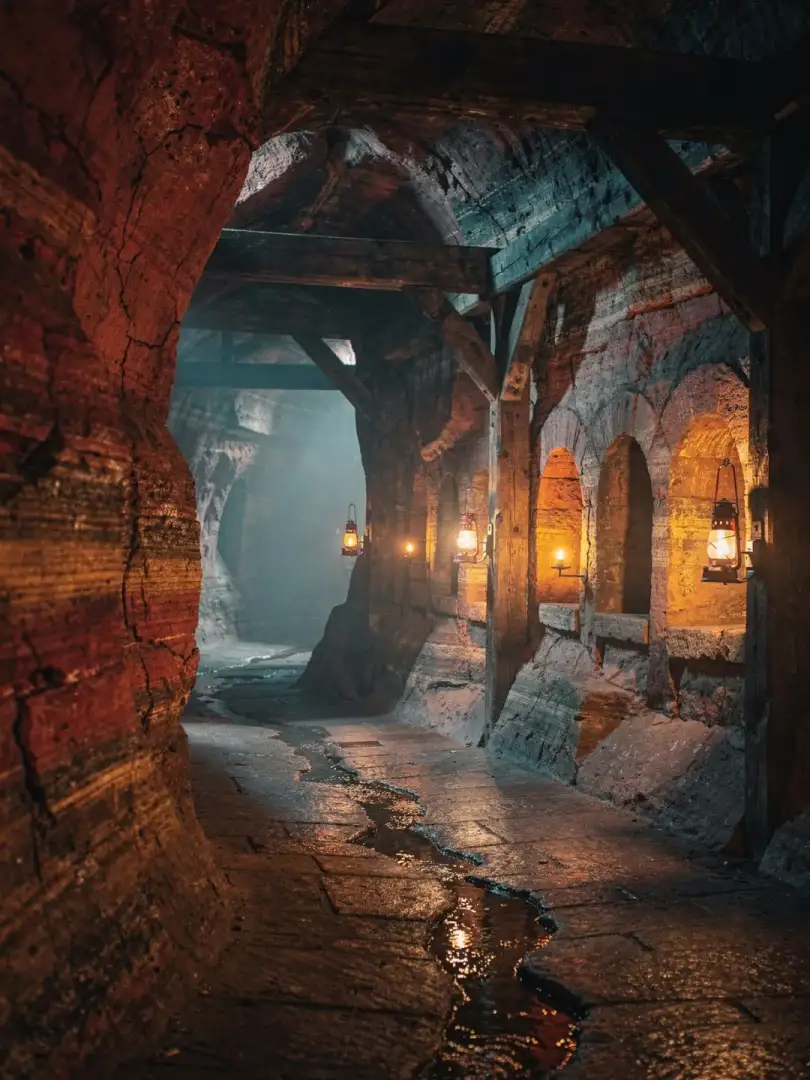
Beneath Nuremberg's old town lies red Buntsandstein, and people have been digging passages into this soft rock since the 14th century. The Historic Rock-Hewn Cellars, covering more than 20,000 square meters according to the city, are considered the largest contiguous rock cellar labyrinth in southern Germany. They were dug primarily to store beer.
Why sandstone? It can be worked with simple tools yet holds its shape, and it shields against heat. Inside the rock-hewn passages it stays cool all year round without anyone needing to heat or cool it. For a beer that needed a long, cold fermentation followed by maturation, this was for a long time the best setup available.
The council required every brewer to have his own cellar, which is why the passages run close beneath the houses and alleys of the old town below the castle. Part of these tunnels is still used today by Hausbrauerei Altstadthof to mature and store its special beers and brandies.
Another part of the underground tells a very different story. When the town hall was built in 1322, an investigative prison was planned into the cellar vaults — the later Lochgefängnisse (dungeon cells). That beer cellars and dungeons share the same rock is one of the city's curiosities.
How hard the water is at Nuremberg and Fürth breweries is stated individually by each house, and there is no shared figure for both cities. One thing can be said, though: today almost all breweries treat their water, softening it or adjusting it with salts. The style is therefore no longer shaped by the well.
The Pegnitz River runs through the city. It once powered mills and carried away wastewater, and in winter the river supplied ice that was used to keep the cellars even cooler.