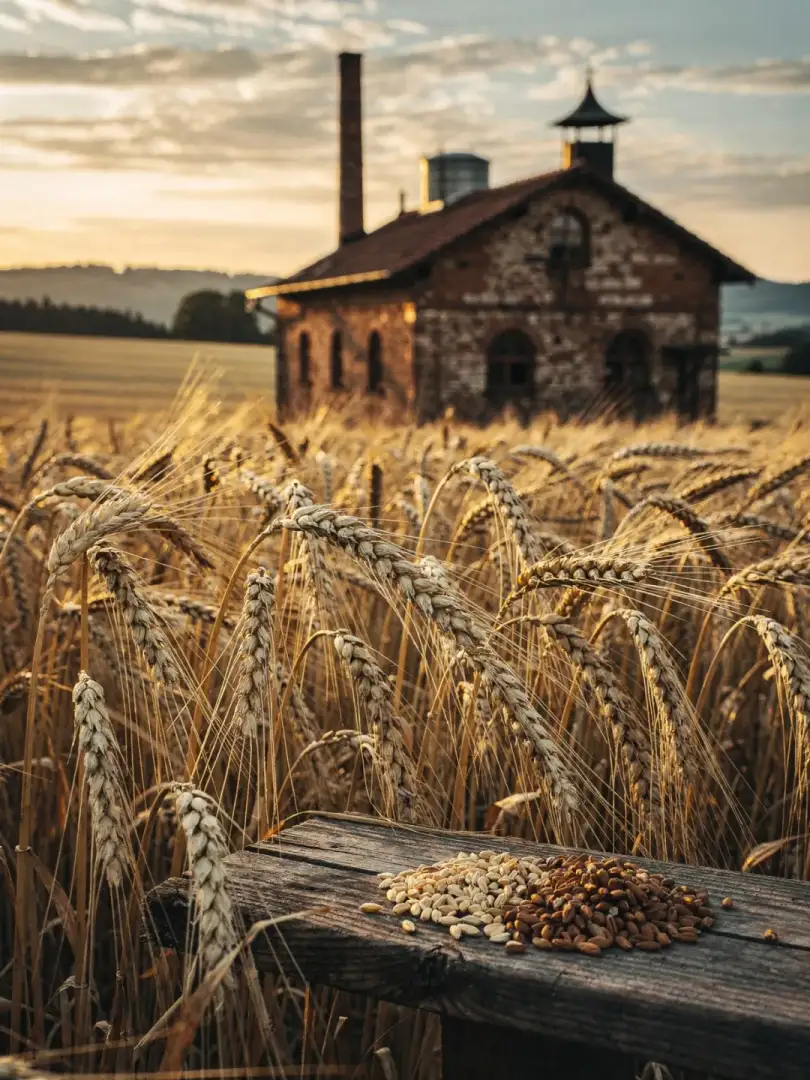
Barley, Kiln, Rye
Malt & Grain
Barley malt forms the backbone of Regensburg's beers. To make malt, grain is germinated and then dried in a kiln, a heated drying chamber. The higher the temperature there and the longer the drying time, the darker and more roasted the malt tastes.
Pale Pilsner malt yields a light, mild beer with flavors of bread and grain. Darker Munich-style malt brings notes of crust, caramel, and lightly roasted nuts. This difference shows most clearly in Dunkel and Bock styles.
Bavaria has stricter rules than the rest of Germany. Even top-fermented beers here may not contain sugar, which would be permitted elsewhere. As a result, the Purity Law still carries more weight in Bavaria than anywhere else.
Water, yeast, and hops are available to every brewery in roughly equal measure—it's the malt that determines body. Taste a Helles and a Bockbier side by side, and what stands out most is the difference in strength and malt character.
Rye also finds its way into the glass. The Spitalbrauerei produces an organic rye beer. Rye malt lends a spicy, slightly bitter note not found in beers made purely from barley malt.
In the Zoigl of the northern Oberpfalz, malt takes on yet another dimension. At the Kommunbrauhaus, brewers work with malt the community purchases together, and in the end each family receives its share of the wort. There's no fixed recipe, so every Zoigl tastes a little different depending on whose house it comes from. The Kneitinger Bock, too, draws its character from dark, full-bodied malt.