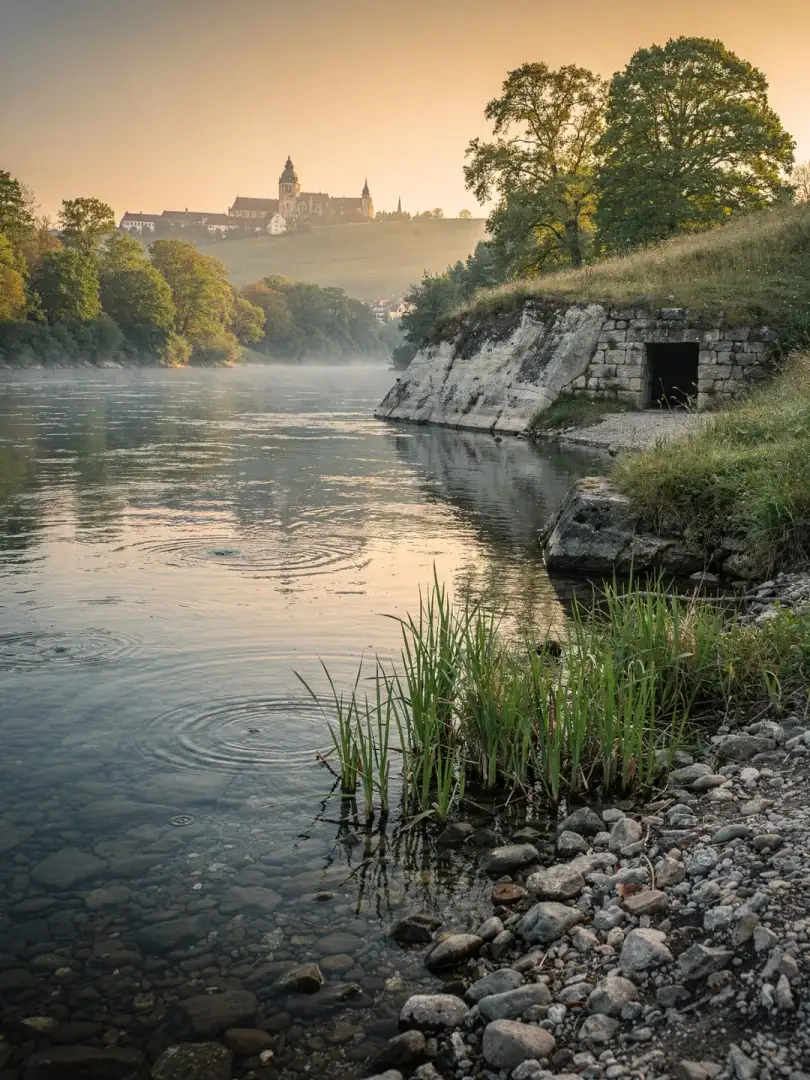
Danube and Hillside
Water & Soil
Where the Regen and Naab rivers flow into the Danube, Regensburg sits at the river's northernmost point. The river valley and surrounding hills have given the city two things every brewer needs: water, and cool hillsides for cellars.
The character a water source gives a beer depends on its hardness—that is, its content of dissolved minerals. Soft, low-mineral water suits a pale, hop-forward Pilsner, the kind brewed in Pilsen. Carbonate-rich water, like that found in Munich, favors dark malts. For Regensburg there's no single defining figure, since each brewery draws from its own well or the municipal supply and treats the water as needed.
That's the norm today. Brewers soften, desalinate, or deliberately add minerals until the water suits the intended style. The old saying that "water makes the style" really describes the era before modern water treatment.
For a long time, cooling mattered more to the character of Regensburg's beers. Beer was stored in cellars that brewers dug into hills beyond the city walls. The Kneitinger Keller, too, sits atop the Galgenberg, overlooking the city. Before refrigeration existed, the hill kept the barrels cool.
Why do so many beer cellars sit on hillsides? Underground, the temperature stays nearly constant year-round—cool in summer, frost-free in winter. In the shade of the chestnut trees above these cellars, beer gardens took root, and they remain part of the classic image of Bavarian towns to this day.