Mountain of the Franconians
Region & History
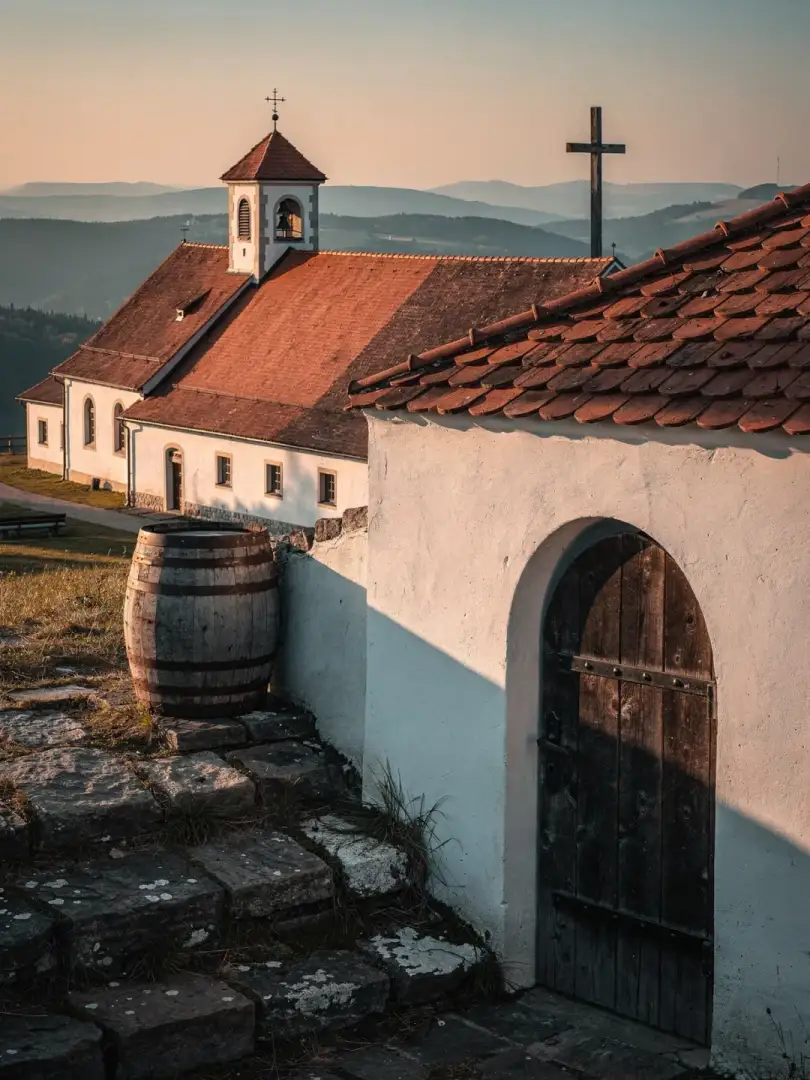
Anyone wanting to know where Rhön beer comes from should first look to the Kreuzberg near Bischofsheim. At 928 meters, Franciscans founded their monastery there in 1692, and in 1731 the monastery brewery was added. The monastery survived secularization, which is why it still brews today.
According to the monastery brewery, it is the highest-altitude monastery brewery in Bavaria and the only one in Germany still run by Franciscans. For centuries monks brewed the beer themselves. Today a secular brewmaster runs the brewhouse, and since 1990/91 the plant has operated fully automatically.
The Rhön lies exactly where Bavaria, Hesse and Thuringia meet, and that has shaped its brewing history. At Rother Bräu in Roth, a district of Hausen, it all began in 1788 with an inn and brewery by the old mill on the Stettbach. In 1872 the Schneider family bought the business, and according to the family, Xaver Weydringer now runs it in the fifth generation.
The border drawn in 1945 hit this brewery hard. According to the company, it lost around 80 percent of its customers because the inns on the other side of the new line suddenly became unreachable. Starting in 1965, the operation gradually relocated to its current site, finishing the move in 1976.
The number of breweries has remained small. The initiative “Wir sind Rhöner Bier” (“We are Rhön Beer”) lists nine members, including Kloster Kreuzberg, Rother Bräu, Pax Bräu in Oberelsbach and the Rhönbrauerei in Kaltennordheim. Several breweries have closed, most recently Karmeliter Bräu in 2024.
There is no dedicated EU geographical protection for “Rhöner Bier”; the name is not listed in the EU register. On the Bavarian side, the Reinheitsgebot (Purity Law) without sugar applies even to top-fermented beers, while in Hesse and Thuringia the respective state regulations apply.