Cool and Quiet
Yeast & Fermentation
Whether a beer is top-fermented or bottom-fermented comes down to the yeast. Top-fermenting yeast works at room temperature and rises to the surface, while bottom-fermenting yeast ferments cool and settles at the bottom once finished. The Rhön’s classic flagship beers — Pils, Dunkel and the Kreuzberg Christmas Bock — are all bottom-fermented lagers.
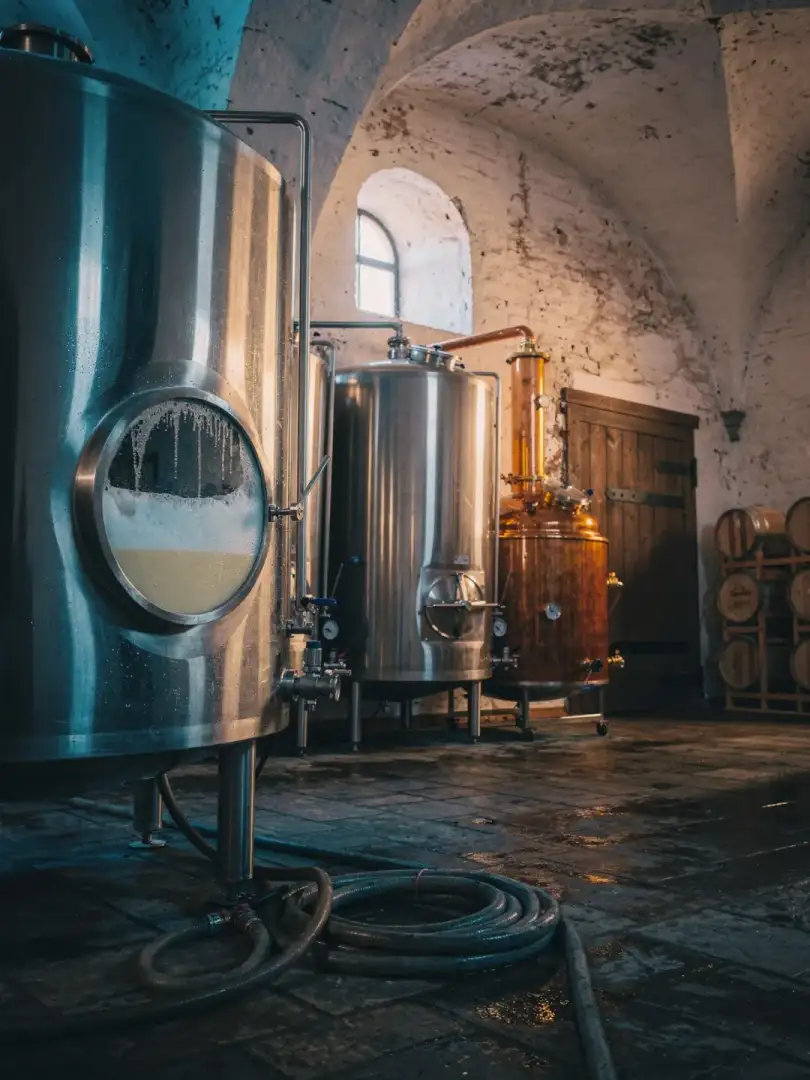
Bottom-fermenting yeast needs cold, and the Rhön still delivers that today. After the vigorous primary fermentation in the vat, the young beer moves into the lagering tank, where it matures at temperatures near freezing. During this time, the yeast breaks down byproducts that would otherwise give the beer a young, grassy taste.
How long any particular beer rests varies from brewery to brewery. As a rule of thumb: the stronger the beer, the longer the lagering — a Bock gets weeks more than a Pils, and the Kreuzberger Klosterbier is given its time before it’s bottled or kegged. Rhön breweries rarely give exact day counts, and we won’t invent any here.
In the past, brewers lagered their beer in cellars and inside the mountain, for as long as the cold held — before refrigeration, lagering was simply a matter of the season. On a mountain like the Kreuzberg, the cold winter kept the cellars chilled longer than down in the valley.
Today the beer ferments and matures in stainless steel tanks. Whether a beer is filtered or left naturally hazy is noted on the label and comes down to taste. Anyone curious can ask at Rother Bräu in Roth, which offers brewery tours.