Salt, the Inn, and brewing rights
Region & History
Rosenheim sits at the edge of the Alps, where the Mangfall flows into the Inn. For centuries the Inn was a trade route: rafts carried salt down from Reichenhall, and the Salt Road crossed the river at Wasserburg. When the Rosenheim saltworks opened in 1810, this trade nearly ground to a halt. The last steamboat ran on the Inn in 1865.
The Flötzinger Brewery traces its roots to 1543, when Duke Wilhelm IV granted brewing rights to the "Bräu in der Wiesengasse." After a bankruptcy, Georg Fletzinger from Ramerberg bought the business and gave it his name. Johann Krichbaumer acquired it in 1864, and today the Steegmüller family runs the city's only private brewery. They report an annual output of around 380,000 hectoliters.
Auerbräu is younger. Johann Auer bought a large plot by Rosenheim's train station in 1887, and on September 17, 1889, the first brew was made at the new brewery on Münchener Strasse. He chose the capercaillie (Auerhahn) as his emblem, and it remains the brewery's symbol to this day. Auerbräu is now part of the Paulaner Brewery Group.
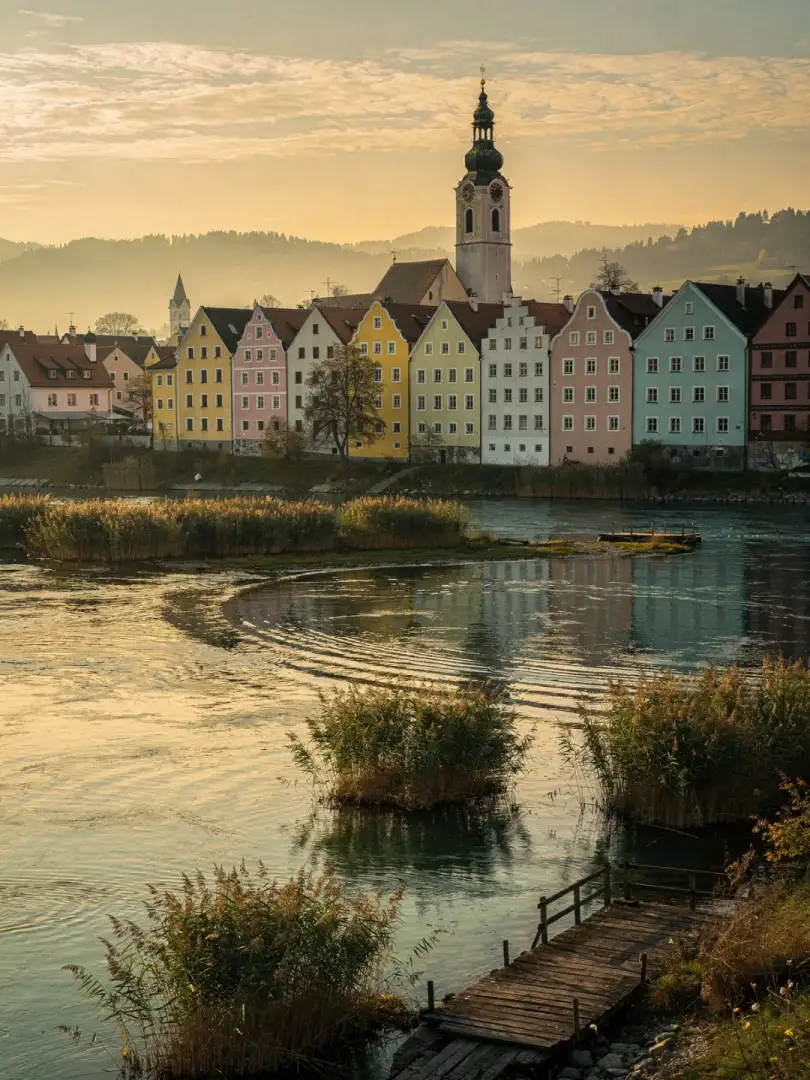
Wasserburg, north of Rosenheim on the Inn, once had 15 breweries at its peak. None brew there today; the last one closed in 1994. Christoph Stechl had already built a brand-new brewery outside the old town in 1860, which began operations in 1864.
There's no dedicated protected designation for "Rosenheim beer." What is protected is "Bavarian Beer," registered as a Protected Geographical Indication (PGI) in the EU since 2001. And in Bavaria, the sugar ban also applies to top-fermented beers.