Collieries, immigration, Pils
Region & History
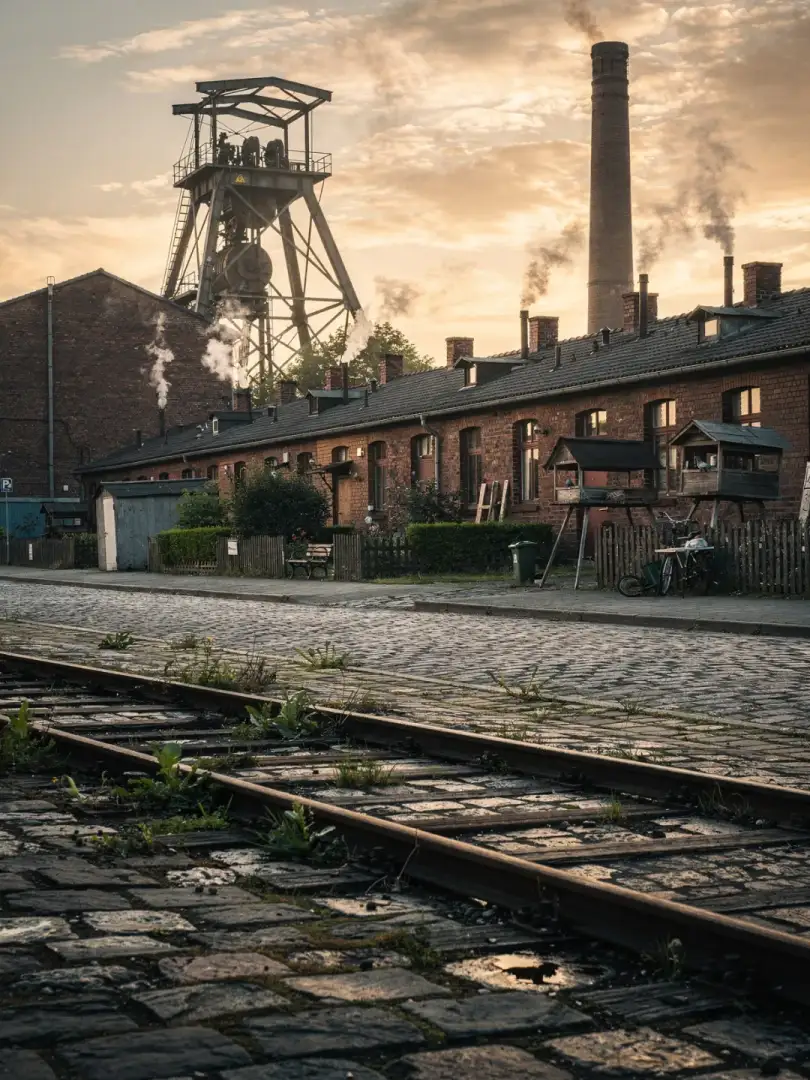
Kumpelbier isn't a beer style of its own in the Ruhr Region, it's a feeling: the Pils after the shift, in the pub around the corner or at the Trinkhalle. In the 19th century, collieries and ironworks sprang up here, and with them came hundreds of thousands of workers. Villages turned into industrial towns, and anyone working shifts had a thirst, and a ready market behind it.
Stauder in Essen is one of the oldest names. Theodor Stauder took over the Schlicker house brewery in 1867 and brewed bottom-fermented beer from the very start. In 1888 his son Jacob moved the brewery to Altenessen and had it registered under his own name. According to the brewery, the sixth generation of the family now runs the business.
In Duisburg, Theodor König founded a brewery in Beeck in 1858, which did not yet belong to the city at the time. He went against the top-fermenting trend of his day and chose the elaborate Pilsner-style brewing method instead. The König Pilsener brand has been documented since 1911, and the brewery has belonged to the Bitburger Braugruppe since 2004.
In Bochum, the Moritz Fiege brewery names 1878 as its founding year. The family brewed its first Pils in 1926 and, according to its own account, is now run by the fifth generation.
Pils brewing in the Ruhr Region thus developed in parallel across several towns. Dortmund, the big brewing city on the eastern edge, has its own region with Dortmunder Export and the protected designation of origin "Dortmunder Bier" (PGI, since 1998). No such protection exists for the Pils from Essen, Bochum and Duisburg, since "Pils" is a generic term in Germany.
Exactly how many breweries exist in the Ruhr Region today is not documented here. What's certain is the mix: one corporate brewery, several family-run breweries and small house breweries. The same law applies nationwide for bottom-fermented beer: only barley malt, hops, yeast and water.