Ruhr, Carboniferous, Emscher
Water & Soil
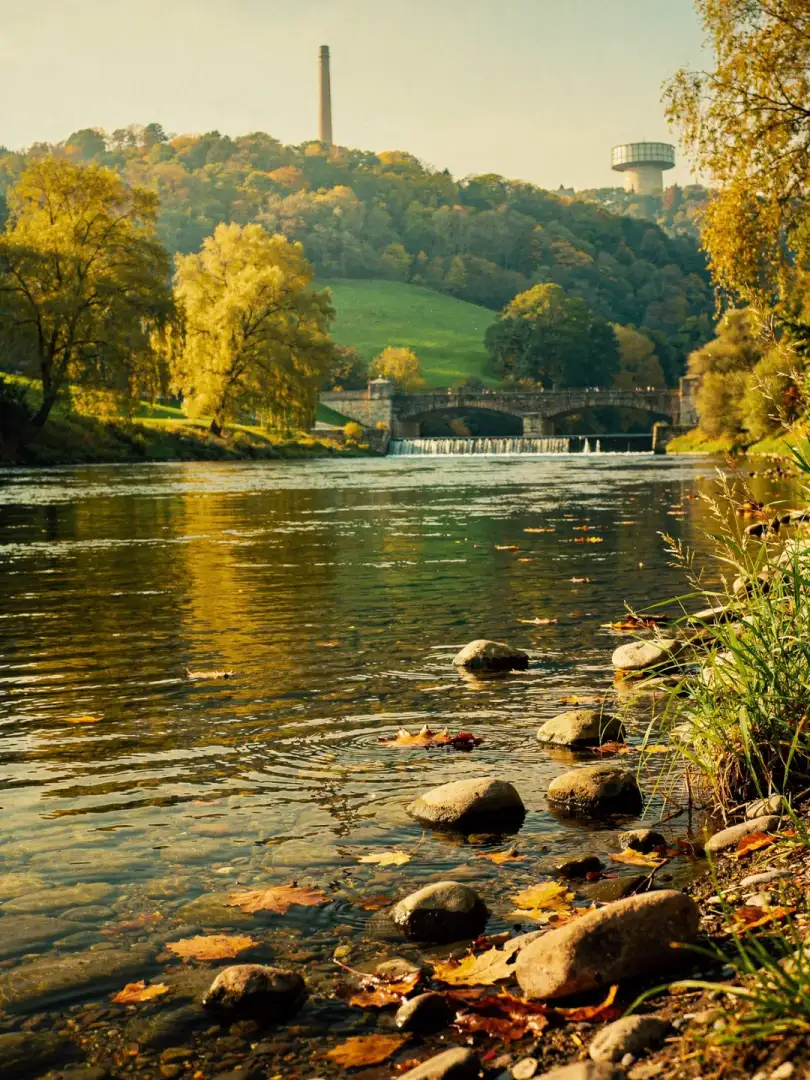
The region takes its name from a river. The Ruhr flows through Hagen, Witten, Essen and Mülheim, and its catchment area still supplies drinking water to millions of people today. So anyone pouring a Pils in Essen, Bochum or Duisburg is drinking beer from a region that has long managed its water with great care.
Beneath the city lies the reason for its industry. The hard coal dates back to the Carboniferous period and is around 300 million years old. In the south it lies close to the surface, while further north the overlying layers of chalk marl grow ever thicker. That's why the collieries gradually moved northward over time.
Mining has changed the water of the region. The ground subsided, and the Emscher, used as an open sewer for decades, was rebuilt in a century-long engineering project. To this day, mine water is pumped out of the disused collieries to stop it rising into the groundwater.
How hard the brewing water is at each individual brewery is best explained by their own data sheets. There are no reliable shared measurements for the Ruhr Region as a whole. König states that its Pilsener uses mineral-rich water from the Hohe Mark nature park in the northern Münsterland, according to the brewery. Almost all breweries treat their water today, meaning they soften it or adjust it with salts.
Pils tastes better with soft water, since hard carbonates make the bitterness blunt and harsh. The city rarely had cool cellars cut into rock in the past, which is why refrigeration machines and later steel tanks made lagering possible. Today the beer rests at temperatures close to freezing.