Cold Fermentation, Lagering
Yeast & Fermentation
Is Pils top- or bottom-fermented? Pils is bottom-fermented, meaning the yeast works at cool temperatures and settles at the bottom of the tank at the end. Theodor König took this risk in 1858 in Duisburg-Beeck, against the trend of the time, since the process was elaborate and considered unpopular in his area.
The yeast is called Saccharomyces pastorianus and is a hybrid of two species. Since 2011 it's been known that one of the parent strains is Saccharomyces eubayanus, first discovered in Patagonia. Emil Christian Hansen achieved the first pure culture of a bottom-fermenting yeast in Copenhagen in 1883, and breweries have worked with cleanly cultivated strains ever since.
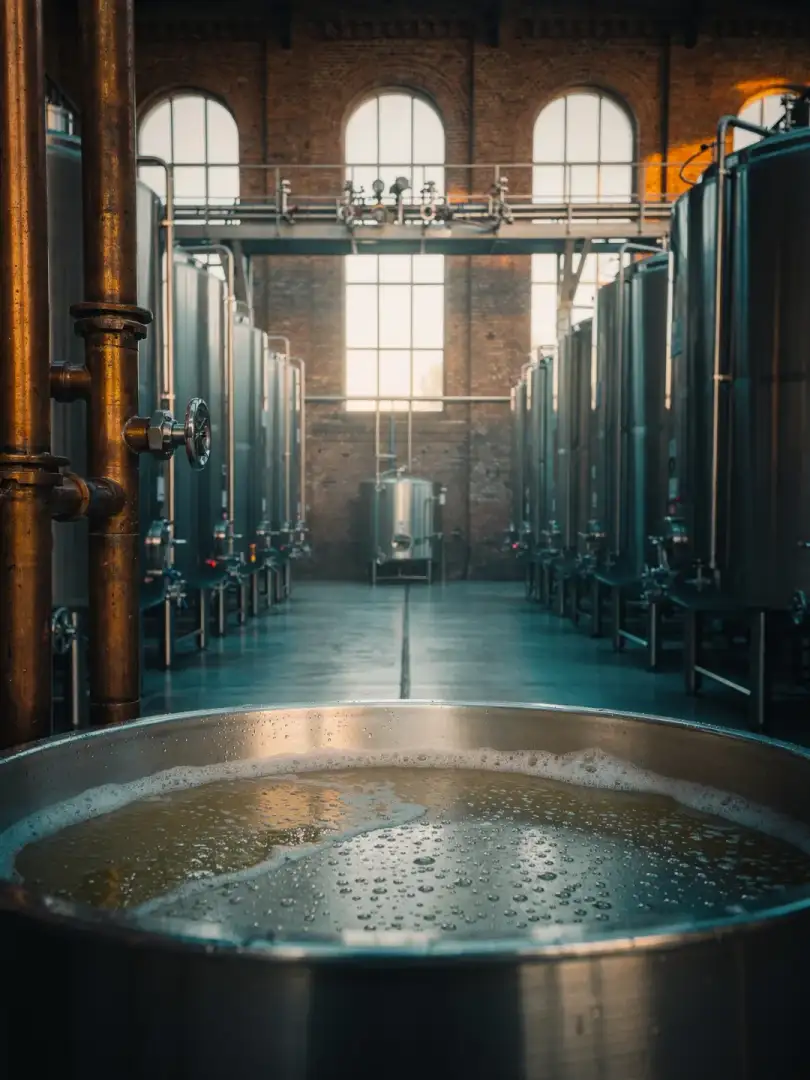
How long does a Pils ferment? Primary fermentation typically takes about a week at temperatures of around 8 to 12 degrees Celsius. After that comes lagering, which for Pils usually takes several weeks at around 0 to 4 degrees Celsius. During this time the beer clarifies and develops its rounded, clean flavor, which is why it's called a lager.
These time frames vary by brewery and are only guideline values. Here in the region, in Altenessen as in Bochum, lagering has long taken place in large steel tanks, not rock cellars. In the industrial city, refrigeration machines were the key, without them year-round brewing of bottom-fermented beers would never have become established.
The yeast is also the reason Pils looks so clear in the glass. In the end the beer is filtered, and only a few breweries bottle it unfiltered. You can taste it: no fruity esters like in a top-fermented Kölsch or Alt, but a clean, almost neutral canvas in which malt and hops speak for themselves alone.