Regional Pils
Beer Styles
The signature beer of the Ruhr Region is German Pils. Pilsner refers to a pale, bottom-fermented beer with pronounced hop bitterness. König Pilsener from Duisburg even carries it in its name. The name comes from Pilsen in Bohemia, where the Bavarian brewer Josef Groll first brewed this way in 1842. In the region, from Bochum to Duisburg-Beeck, it became the everyday beer ordered after work.
How does Pils differ from Export? Dortmunder Export, the specialty of the neighboring city, is more full-bodied. It has a higher original gravity, meaning more dissolved matter in the wort before fermentation, and tastes maltier and softer. Pils is leaner, drier and more bitter. Since Dortmund has its own region, we'll leave it at that comparison here.
Next door in the Rhineland, people drink top-fermented beers: Kölsch in Cologne and Altbier in Düsseldorf. Both come from the world of top fermentation, with more fruitiness. It's different in the Ruhr Region, where bottom-fermented Pils is considered the benchmark, and everything else poured is seen as a side note.
Alongside classic Pils, there are now also Kellerbier, Weizen and craft beers from small house breweries. These are a recent addition but don't yet define the character of the region. Anyone who wants to know what the Ruhr Region tastes like should order a Pils on tap or from the bottle.
The profile range comes from the BJCP competition guidelines of 2021. Individual beers may fall outside it, the values on the label are more binding.
Pilsbottom-fermented
- Original gravity
- 11–12.4 °P
- Alcohol
- 4.4–5.2 % vol
- Bitterness
- 22–40 IBU
- Colour
- 4–8 EBC
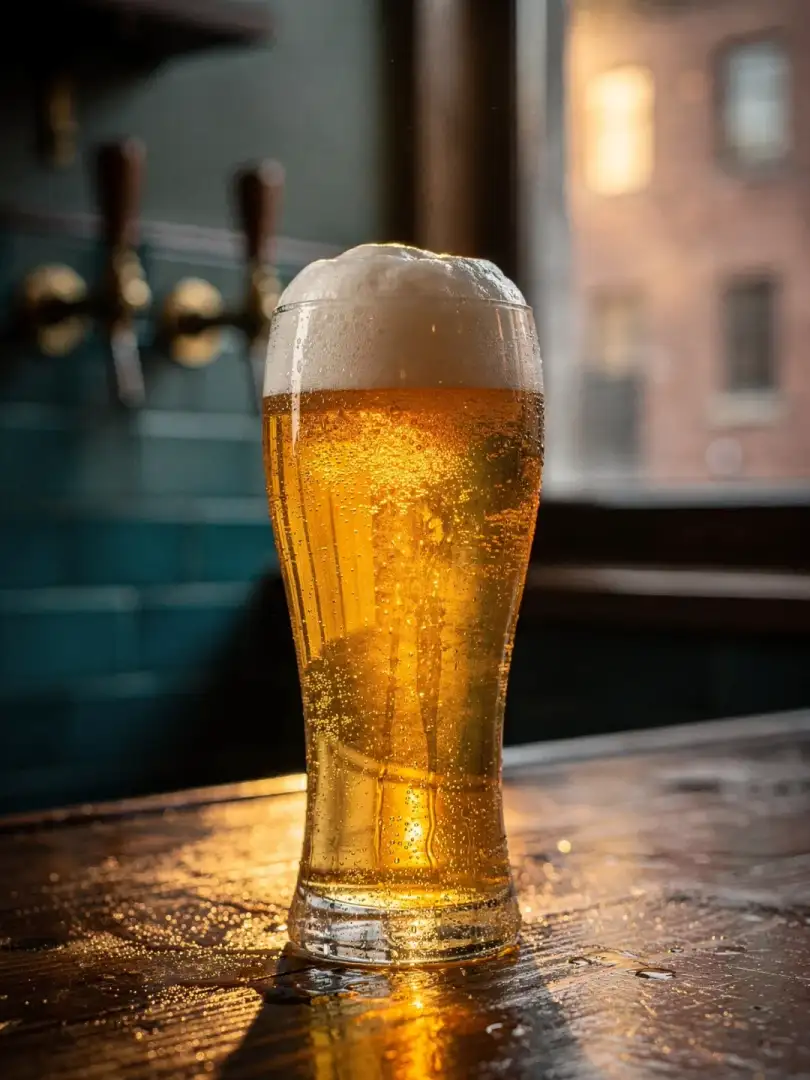
Pale to golden yellow, firm head of foam, pronounced hop bitterness, dry, clean finish.