Pilsner in the Glass
Tasting
What does a pilsner from the Saar taste like? Pale, dry, with a clean bitterness in the finish. Karlsberg Ur-Pils is a well-known example of this. It shows what an everyday pilsner tastes like when the brewery focuses on freshness and drinkability rather than complex aromas.
A second example is the Falkensteiner Ur-Weisse from the Bischoff brewery in Winnweiler. It's hazy, tastes of ripe banana and clove, and has a creamy head. Taste the two side by side, and you'll instantly notice the difference between bottom- and top-fermented beer.
From Pirmasens comes the Parkbrauerei, which says it has been brewing since 1888. If you want, you can try another regional pilsner there and compare it to the Karlsberg version. You'll notice just how subtly pilsners can differ in bitterness and body, even when brewed to the same style guidelines.
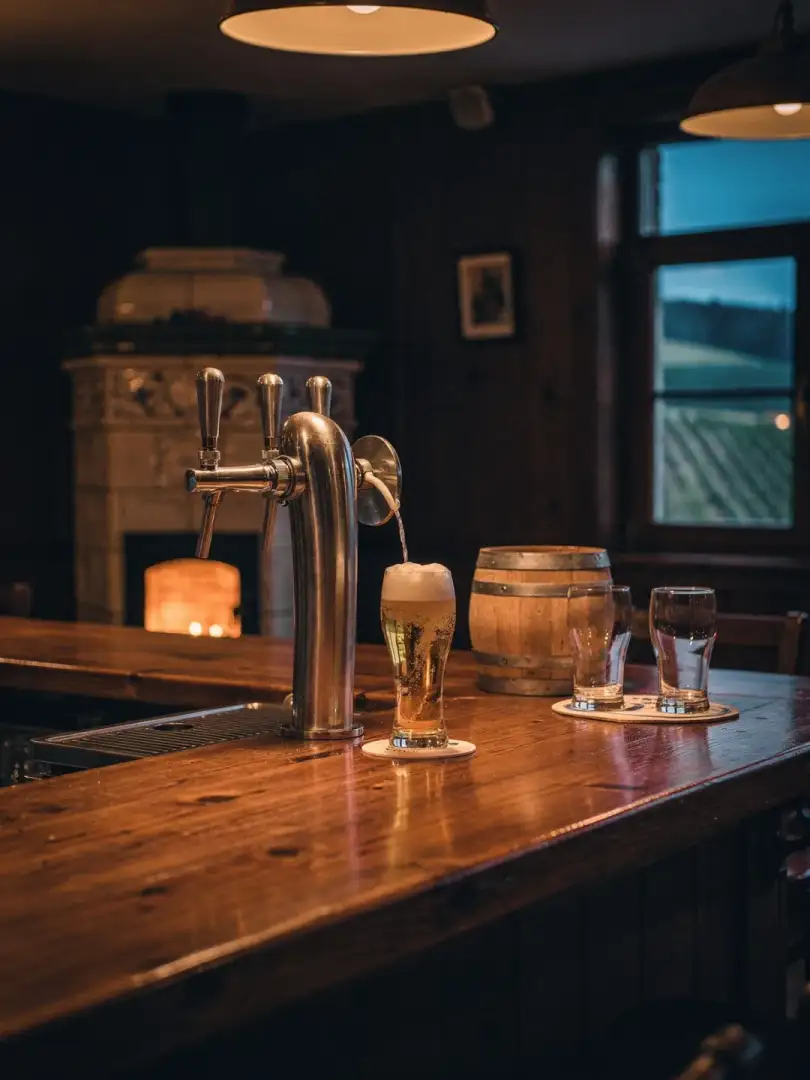
The glass of choice for pilsner is the tulip, or Pilstulpe, a slim glass with a slightly curved rim that holds the foam. Wheat beer is served in the tall weizen glass, where the yeast swirls and the foam has room to build. Pilsner should be served cold, wheat beer a touch less cold, since too much chill can mask the aromas.
Pouring takes patience. A pilsner is poured in several stages so that the head sets firm and fine-pored. The often-cited ‘seven minutes' is really just a saying — there's no actual standard for it. What matters is a clean glass, cold beer, and a steady pour.