Two Paths
Yeast & Fermentation
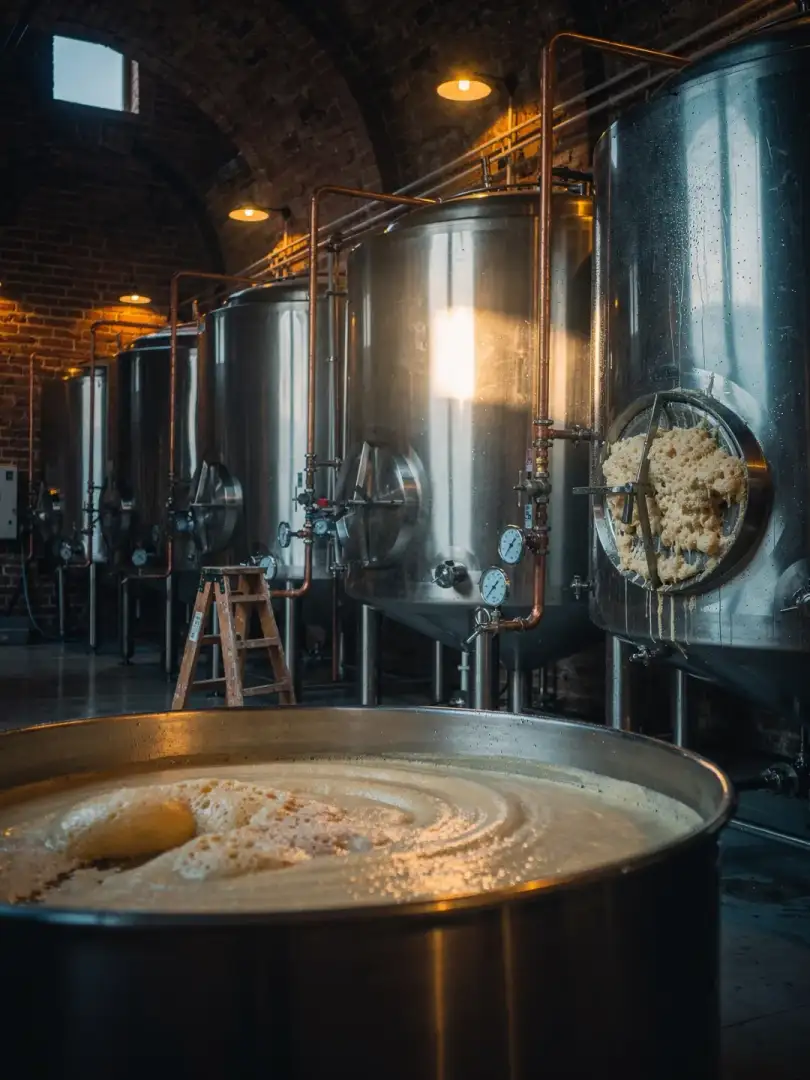
During fermentation, yeast converts the sugar in the wort into alcohol and carbon dioxide. Wort is the liquid produced after mashing and boiling. In Sachsen-Anhalt, two paths run side by side, and both have a history here.
Pils and most lager beers are bottom-fermented. Their yeast works at around 8 to 12 degrees Celsius, settles at the bottom of the tank, and then needs weeks of cold storage to mature. In Magdeburg, Brauerei Bodenstein's "Bavarian Beer" became known for this method, and the brewery's ice machine was a real advantage for this cold-lagered beer.
Gose, by contrast, ferments with two microorganisms at once. A top-fermenting yeast produces alcohol, while lactic acid bacteria give the beer its sourness. This is called mixed fermentation, and it runs considerably warmer than fermentation for a Pils. The sour note is intentional, not a flaw. Yeast is a fungus that multiplies in the tank, and after fermentation it's separated out so the young beer can mature for a while longer.
Some brewers sour the wort beforehand and only let the yeast work afterward. This makes the result more predictable. The old methods used by the Döllnitz Gose brewers have only survived in fragments, and the exact yeast strains they used are not documented.
Nowadays, storage almost everywhere means a stainless-steel tank, refrigeration, and time. Open vats or wooden casks have no documented tradition at the region's larger breweries. So anyone drinking a tank beer in Halle or Magdeburg is usually drinking a modern lager or a modern Gose.