Brine, Loess, Heath
Water & Soil
What water do brewers in Sachsen-Anhalt use? There's no documented hardness figure for the region as a whole, and a made-up number would be meaningless. What's certain is that nearly every brewery today treats its water, either softening it or adjusting it with salts. The soil shapes the land, but it barely shapes the beer anymore.
The Saale river gave the city of Halle both its name and its wealth. "Hal" derives from the salt that was boiled here from brine springs, and the city's salt boilers are still called Halloren today. The fact that Gose contains salt, however, comes from its Goslar recipe. There is no evidence, as far as is known today, that Halle's brine ever actually went into the beer.
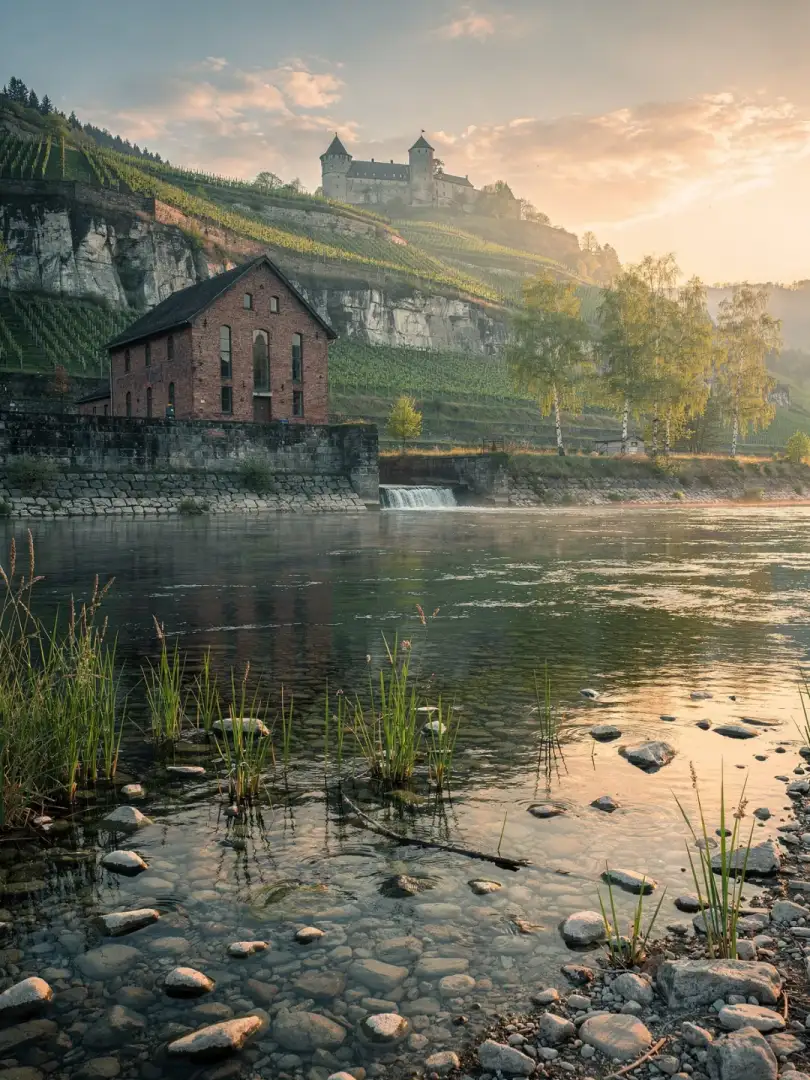
Further south, in the Saale-Unstrut wine region, vines grow on terraces of shell limestone and red sandstone. It's Germany's northernmost quality wine-growing region, and its wine cellars are often carved into the rock. No such rock cellars for beer have been documented here, since the big Magdeburg breweries switched to mechanical cooling early on.
North of Magdeburg lies the Colbitzer Heide, a sandy forest area. The local Heide-Brauerei advertised using water from the surrounding region. That claim comes from the brewery itself, and with its closure in 2026, this site will also disappear.
In 1823, Magdeburg bet on technology rather than rock. Brauerei Bodenstein is said to have been the first in the city to acquire an ice machine, which kept beer cool all year round. Brewing bottom-fermented beer requires cold, and the machine could deliver that better than any hillside cellar.