Börde and the Malthouse
Malt & Grain
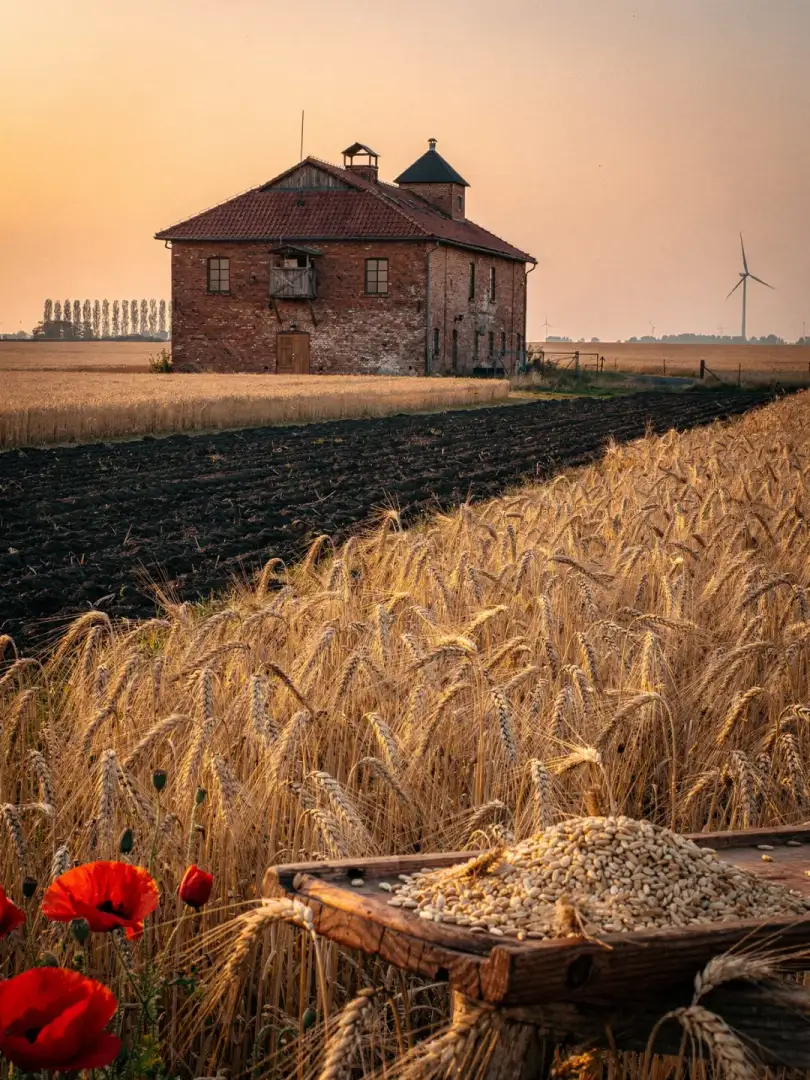
Fertile soil makes Sachsen-Anhalt a farming region. The Magdeburger Börde sits on loess, a very fine, fertile soil where wheat, barley and sugar beets grow. So the grain for beer is right on the doorstep, even if not every kernel ends up in a local brewery. Brewing barley needs to be high in starch and low in protein so the finished beer stays clear.
Barley becomes malt by soaking it in water and letting it germinate. Growth is then halted by drying and heating it in the kiln, a heated drying chamber. The hotter the kiln, the darker the malt becomes and the more roasted aroma it contributes. Pale pilsner malt, by contrast, stays light in color and tastes of biscuit.
A malthouse was founded in Landsberg near Halle in 1871. The brewery that later emerged from it bottled its first beer in 1997. According to reports, both the malthouse and the brewery have not continued operating since 2026. The story shows how closely malting and brewing were once linked here, and how thin this branch of the industry has become.
Gose calls for a different grain. It's a wheat beer with a proportion of barley malt, which is why it tastes softer and breadier than a Pils. The wheat also accounts for the slight haze, which is entirely normal here. Wheat malt also brings more protein, giving the beer body and a stable head of foam.
And the region's Pils? As everywhere in Germany, it's made from pure barley malt. For bottom-fermented beers, German beer law permits only barley malt, hops, yeast and water.