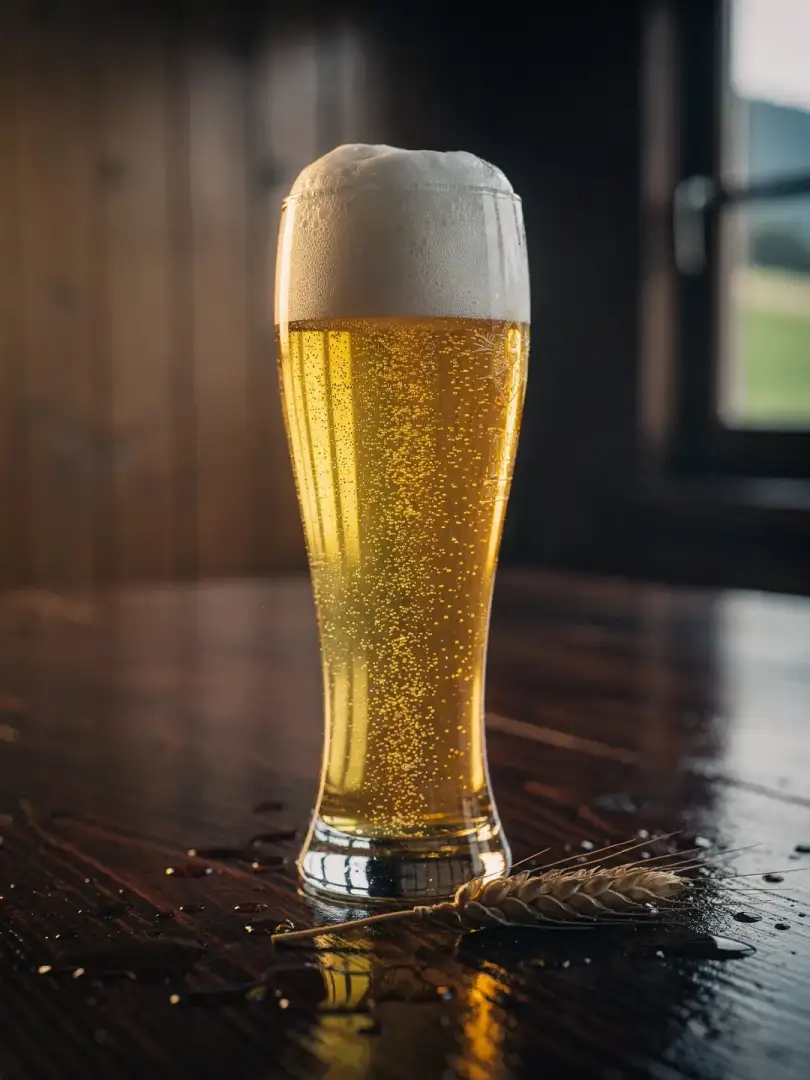
Sauerland Pilsner
Beer Styles
What is Pilsner, and what defines the Pilsner from Sauerland? Pilsner is a pale, bottom-fermented beer with pronounced hop bitterness and a firm, white head. It takes its name from Pilsen, where the first batch was brewed in 1842.
German Pilsner is drier and more bitter than its Bohemian counterpart. According to BJCP guidelines, it has 4.4 to 5.2 percent alcohol and falls between 22 and 40 IBU. Helles, the style from Munich, comes in at just 16 to 22 IBU and tastes softer and maltier.
The difference from Export, as brewed in Dortmund, lies in strength and body: Export has a higher original gravity, meaning more dissolved sugar before fermentation, and tastes rounder. Pilsner is lighter and leaner. An Export starts at around 12.4 degrees Plato — the unit used to measure original gravity — and goes up to 14.3 under BJCP guidelines, while Pilsner stays below that.
The three major brands exemplify the style. According to the brewery, Veltins has brewed exclusively Pilsner since 1926, and both Warsteiner and Krombacher have made their Pilsner their flagship brand. Their beers are considered clean, straightforward, and highly drinkable, with a firm head and a bitterness that fades quickly in the finish. That's exactly what you'd expect from a Pilsner brewed with soft water.
A regional specialty is non-alcoholic beer. Radio Sauerland reports that around 90 percent of all non-alcoholic beer produced in North Rhine-Westphalia comes from the Arnsberg administrative district. In Germany, non-alcoholic in practice means up to a maximum of 0.5 percent alcohol, though there's no official legal definition.
Pilsner (German)bottom-fermented
- Original gravity
- 11–12.4 °P
- Alcohol
- 4.4–5.2 % vol
- Bitterness
- 22–40 IBU
- Colour
- 4–8 EBC
Pale gold color, firm white head, crisp hop bitterness, dry finish.