Cold-Fermented
Yeast & Fermentation
Pilsner is a bottom-fermented beer, and that shapes the entire process at the breweries in Warstein, Grevenstein, and Kreuztal. Bottom-fermented means the yeast works at cool temperatures and settles to the bottom of the tank after fermentation, rather than floating on top.
The yeast itself is a hybrid. It's a cross between the brewer's yeast Saccharomyces cerevisiae and a wild species called Saccharomyces eubayanus, which was only identified in Patagonia in 2011.
After brewing in the brewhouse, the wort — the boiled, still sugar-rich liquid — goes into the fermentation tank, where the yeast is pitched. For lagers, the fermentation temperature generally runs well below that used for ale yeasts, often around ten degrees Celsius.
Lagering follows next. The young beer matures at near-freezing temperatures, often over several weeks, allowing it to clear and lose sulfur and buttery off-flavors. The name lager comes directly from this step — from the German word for storing. For Pilsner, this typically takes weeks rather than months, though at large breweries it's often considerably shorter.
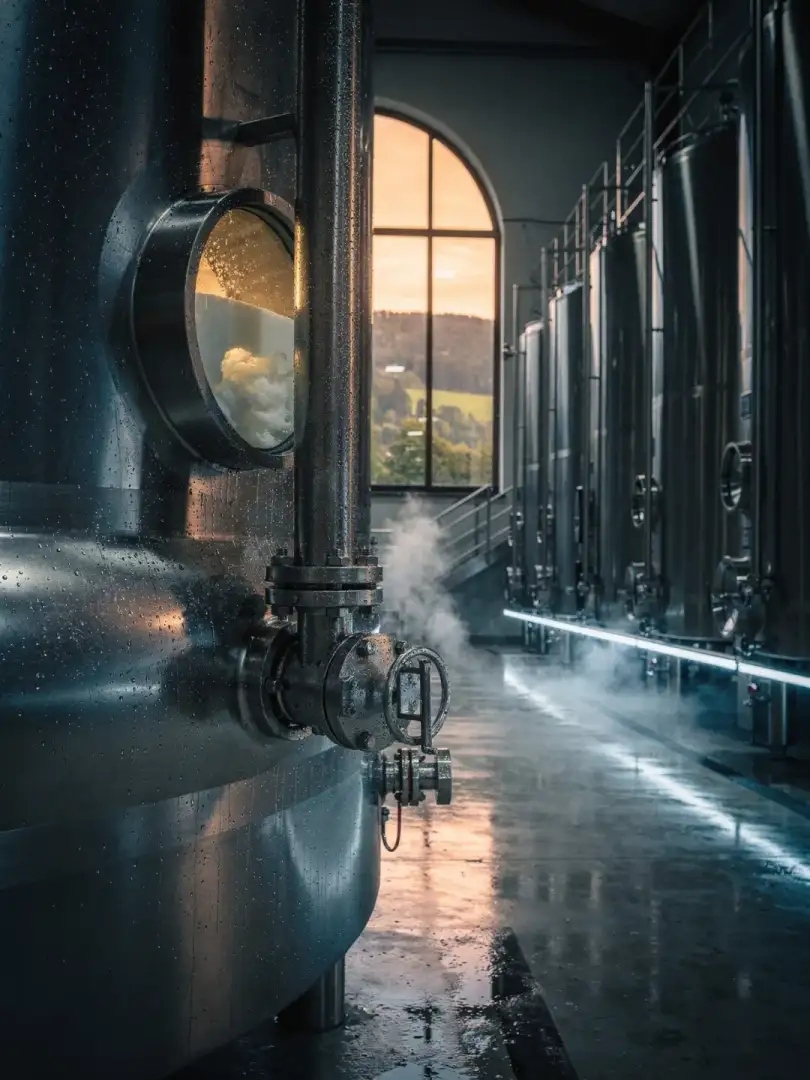
In breweries this size, the process today takes place in sealed stainless steel tanks. Cooling and hygiene are critical here, since even small flaws in fermentation would immediately show up in a pale Pilsner. Old rock cellars, like those found in Franconia, simply aren't built for these volumes.
Finally, the beer is filtered and bottled or canned. It should be bright — completely clear — and taste fresh. The yeast is typically harvested afterward and reused for the next batch, keeping the cycle going.