Ice age and wells
Water & Soil
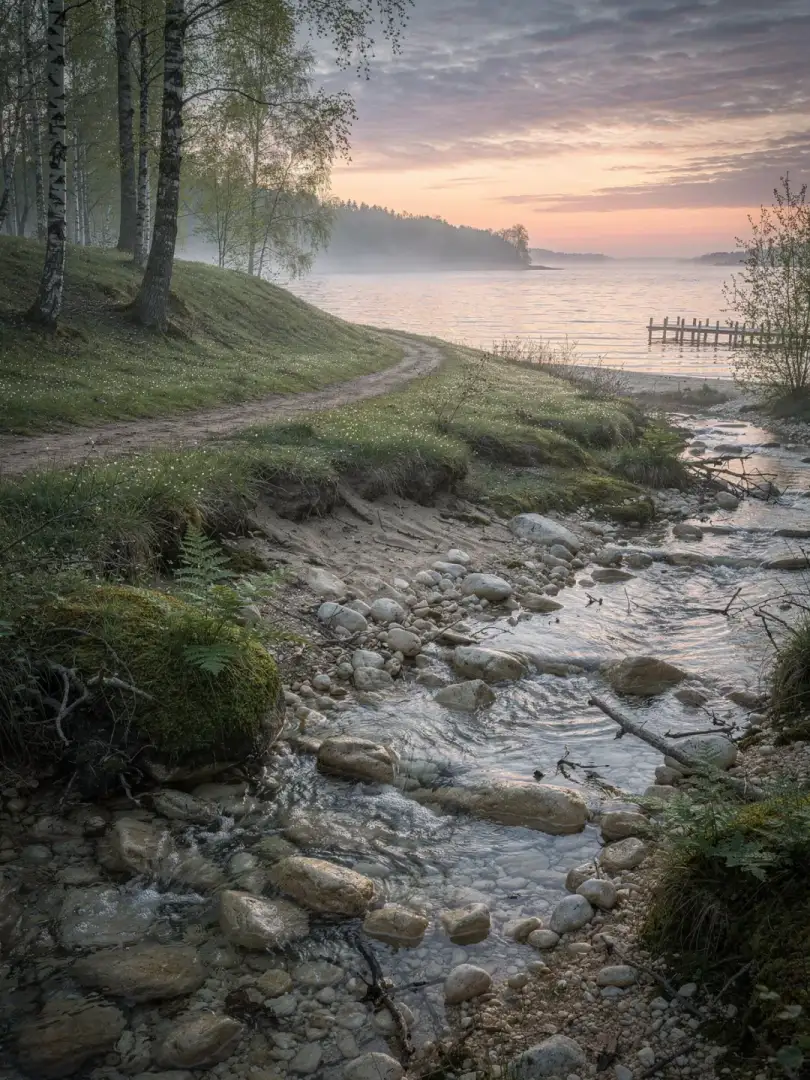
The landscape between the North Sea and the Baltic Sea is a legacy of the ice age. Glaciers pushed sand, clay, and rubble southward, leaving behind the hilly terrain in the east, where fjords cut deep into the land. In the middle lies the Geest with its sandy soils, and along the North Sea coast comes the marsh, flat land that was once submerged.
What matters for brewing water is what lies beneath these soils. Sand and gravel store groundwater that can feed wells. According to its own account, the Flensburger Brauerei on the Flensburg Fjord draws its water from an underground spring fed by glacial meltwater from Nordic Scandinavia.
How hard or soft this water is remains unconfirmed, and no specific figures will be given here. What is certain is that today almost every brewery treats its water—softening it or adjusting it with salts—so that each brew turns out consistently. The old idea that water alone defines a style once held true, but today it barely matters.
The region's salt has also left its mark. Lübeck's wealth was built on the salt trade, which preserved herring, but salt never made its way into the beer. The Pils of the coast tastes of malt and hops, not of the sea.
The north has little rock for cellars, since there are hardly any mountains. Beer is stored in modern tanks at a steady, cool temperature. The old rock cellars found in Franconia are nowhere to be found along the fjord, but a cool cellar is all that North German lager beer needs anyway.