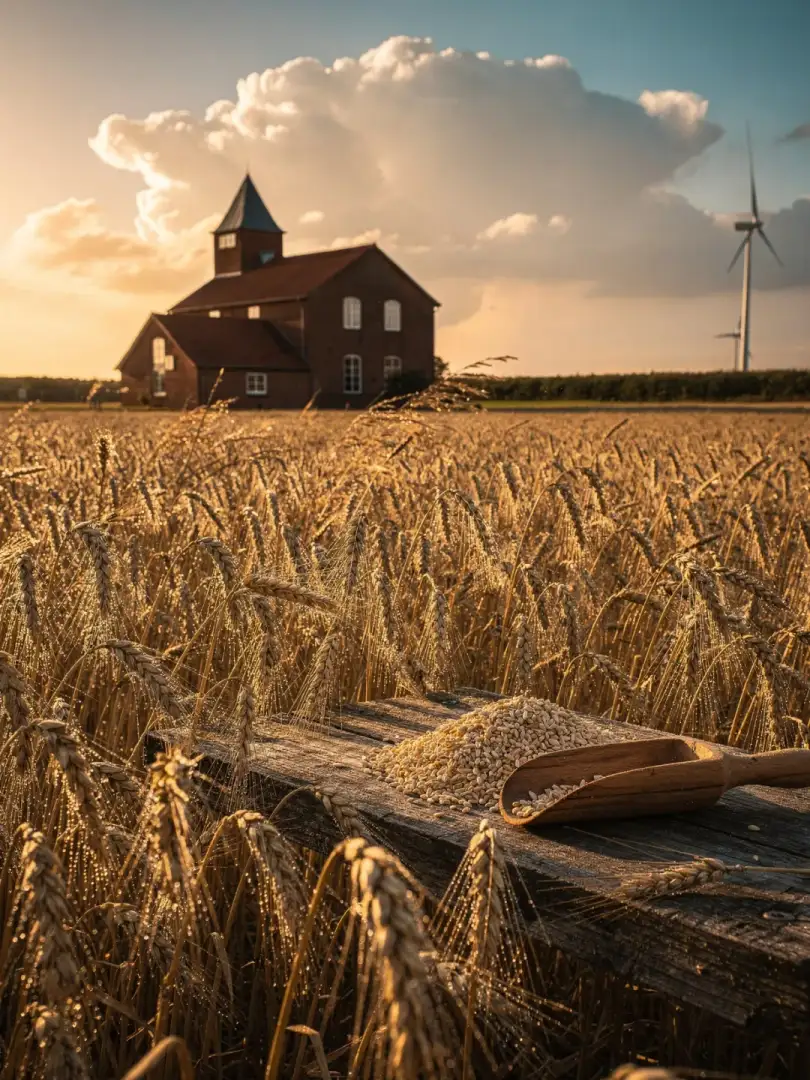
Barley from the field
Malt & Grain
A Pilsener from Flensburg or Marne begins with barley, as does almost every bottom-fermented beer in Germany. The region itself grows plenty of grain, and the fields on the Geest and the marsh are among the most productive farmland in the north. What proportion of the breweries' malting barley actually comes from the local region cannot be verified, so we make no such claim.
Barley becomes malt when the grains are moistened until they germinate, then dried in the kiln. During this process, the barley develops the sugars that yeast will later ferment. The lighter and gentler the kilning, the paler the beer. A Pilsener tastes of fresh bread and honey, while darker malts bring roasted notes and caramel.
Under German law, bottom-fermented beer must use barley malt; no other malts are permitted. Top-fermented beers may include other malts, such as wheat. In Schleswig-Holstein, that's the exception rather than the rule.
The old Lübeck Rotbier likely owed its color to more heavily kilned malt, but no recipes have survived, so this remains speculation. What is certain is that it was strong enough to survive the voyage across the sea.
Today, malt is usually sourced from specialized maltsters rather than produced in-house at the brewery. Which maltsters supply the region's breweries is generally not disclosed by the companies. Schleswig-Holstein is an agricultural land between two seas, and barley has long grown in abundance across its fields.