Sourced from Tettnang
Hops
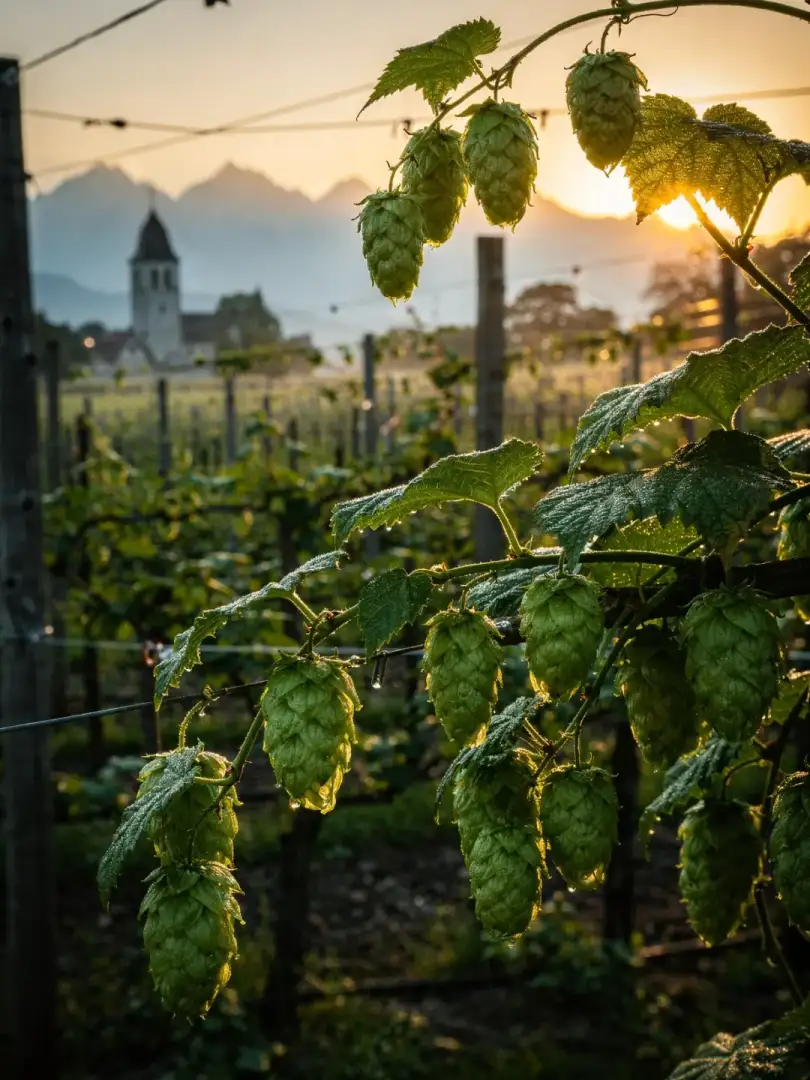
Where do the hops for Alb beer come from? Not from the plateau itself, but from Tettnang on Lake Constance, Baden-Württemberg's best-known hop-growing region. Tettnanger hops have carried a protected geographical indication since 2010, making them one of the few raw materials in the region with an EU seal.
Berg Brauerei names Tettnang hops for its Spezial, and its Hefeweizen also gets a dose of Hallertauer Tradition. Zwiefalten likewise brews its Helles with Tettnanger hops. Both breweries thus emphasize that, at least for barley and hops, the supply chain stays within the southwest.
Hops shouldn't dominate a pale lager. They first deliver bitterness, which offsets the malt's sweetness, and in the background contribute subtle notes of hay, herbs, and blossoms, derived from the resins and oils in the hop cones. Brewers who want more bitterness boil the hops longer; those chasing aroma add them late in the process.
Bitterness is measured in IBU, a figure quantifying bittering compounds. According to the BJCP style guidelines, a Helles falls between 16 and 22 IBU — less than a Pils, giving the malt the leading role.
There's no documented hop acreage on the Alb itself, so no hectare figures exist for the region. What matters is the short distance: from Tettnang to the Alb is no world tour. This lets Berg Brauerei and Zwiefalter Klosterbräu source their hops from an area you could visit in a single day, with the name 'Tettnanger' standing for a delicate, herbal-floral aroma.