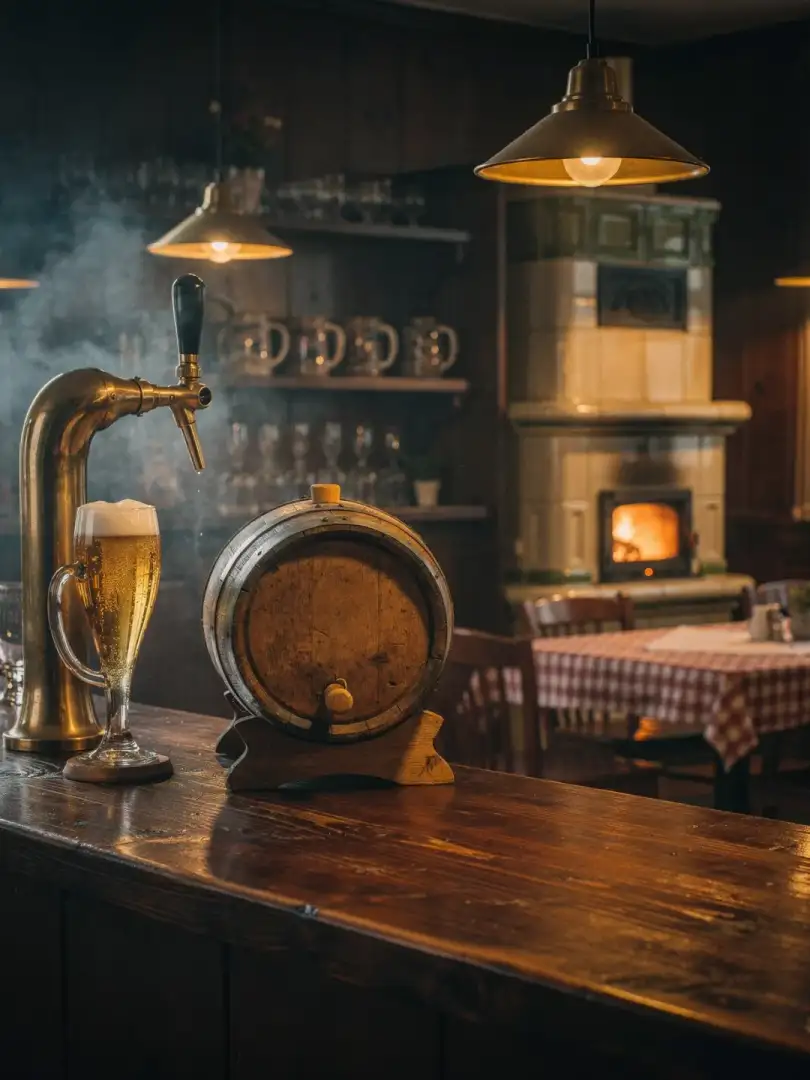
Aroma in the Glass
Tasting
A Spalter Premium Pils first smells of fresh grass, blossoms, and a touch of citrus, with the bitterness following behind. It's clear but not sharp. That fits the character of Spalter hops: plenty of fragrance, low alpha acid. A subtle herbal note lingers at the finish.
Beers from Stadtbrauerei Spalt make good tasting examples. The Spalter Helles Vollbier shows the malty, soft side. The Premium Pils shows what aroma hops taste like. Spalter Dunkel and Spalter Weissbier add to the picture with roasted notes and banana-and-clove character, respectively.
As for glassware: Pils is often served in the slender pils tulip, which holds the foam and concentrates the aroma. Helles suits a stein or a simple glass, while Weissbier belongs in the tall, curved wheat beer glass that supports the foam. In Franconia, the half-liter is often called a Seidla.
Temperature matters a great deal. Cool but not ice-cold — around 7 to 9°C (45–48°F) for Pils and Helles — lets the hop aromas speak. Too cold numbs the tongue. When pouring, tilting the glass helps, then straightening it at the end to build a proper head of foam.
A set order helps when tasting. Look first: color and clarity, foam that's fine and long-lasting. Then smell, without swirling the glass, so the hop aroma doesn't dissipate. Finally, drink, paying attention to bitterness, body, and finish. If you like, jot down what you notice — it's a faster way to learn.