Spring & Hop-Growing Ground
Water & Soil
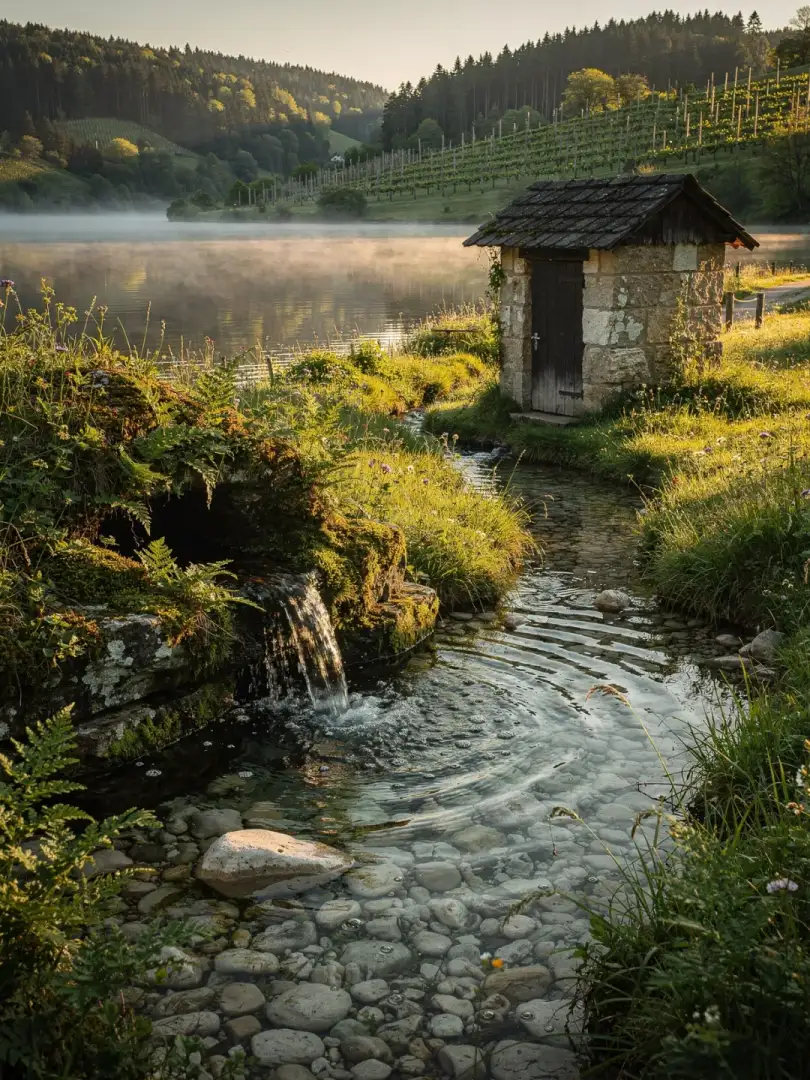
According to the brewery, Stadtbrauerei Spalt's brewing water comes from its own spring, about 64 meters deep, and is soft. Soft means it contains few dissolved minerals like calcium. The brewery doesn't publish exact measurements here, so this description has to suffice.
What that does to the beer is easy to explain. Soft water brings out hop bitterness cleanly, rather than making it harsh or sharp, and lets pale malts come through delicately. A Pilsner benefits especially from this, much as Pilsen itself set the standard with its very soft water. Many breweries treat their water today regardless, but starting with soft spring water means less correcting to do.
The Franconian Lake District gives the region its present-day character. Altmühlsee and Brombachsee are reservoirs built as part of a water transfer system between the Danube and Main river basins. They have nothing to do with the brewing water, but plenty to do with the climate and the day-trippers who wander the shores toward the nearest inn.
For hops, it's the soil that counts. The seal area's specification calls for deep, light to medium, easily warmed soils. Add to that around 650 millimeters of rainfall and roughly 1,700 hours of sunshine a year. With that much warmth and air in the soil, roots can reach deep, and the delicate aromas ripen slowly. On heavy, waterlogged soils this works less well, and a cool, rainy summer noticeably dents hop quality.