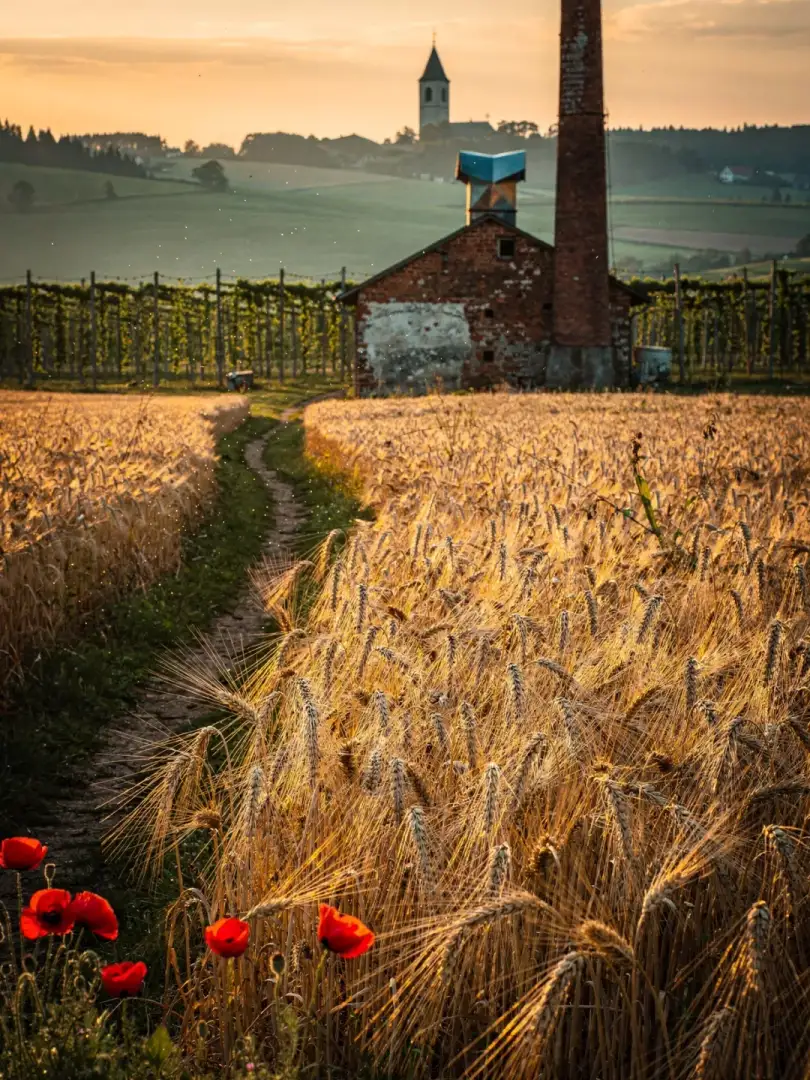
Barley, Wheat, Kilning
Malt & Grain
Barley becomes malt before it becomes beer. To do this, the maltster lets the grains germinate with water so they break down their starch, then halts the sprouting in the kiln, a warm drying oven. The hotter and longer the kilning, the darker and more roasted the malt.
Stadtbrauerei Spalt lists hops, malt, barley, and water as its ingredients. Where its barley comes from and which maltster supplies it isn't documented here, so that remains an open question. What is certain is the approach: it brews according to the Reinheitsgebot, and in Bavaria that applies to top-fermented beers too — meaning no sugar.
The choice of malt explains the colors in the glass. A Pilsner uses very pale malt, with the style sitting at 4 to 8 EBC according to the BJCP. EBC is brewers' color scale, where a low number means pale. A Helles sits at 6 to 10, while a Munich Dunkel runs 33 to 55.
With Weissbier, wheat malt joins the mix, giving the beer its soft, bready fullness. For bocks like the Spalter Bockl, in pale and dark versions, more malt is used. That raises the original gravity — the sugar content of the wort before fermentation — and with it, the final alcohol. Under German beer regulations, a beer can only be called a bock from 16 percent original gravity upward.
So malt carries the body, and Spalter hop lays the aroma on top. Together they produce beers that drink easily yet still have something to say.