Bottom-Fermented and Cool
Yeast & Fermentation
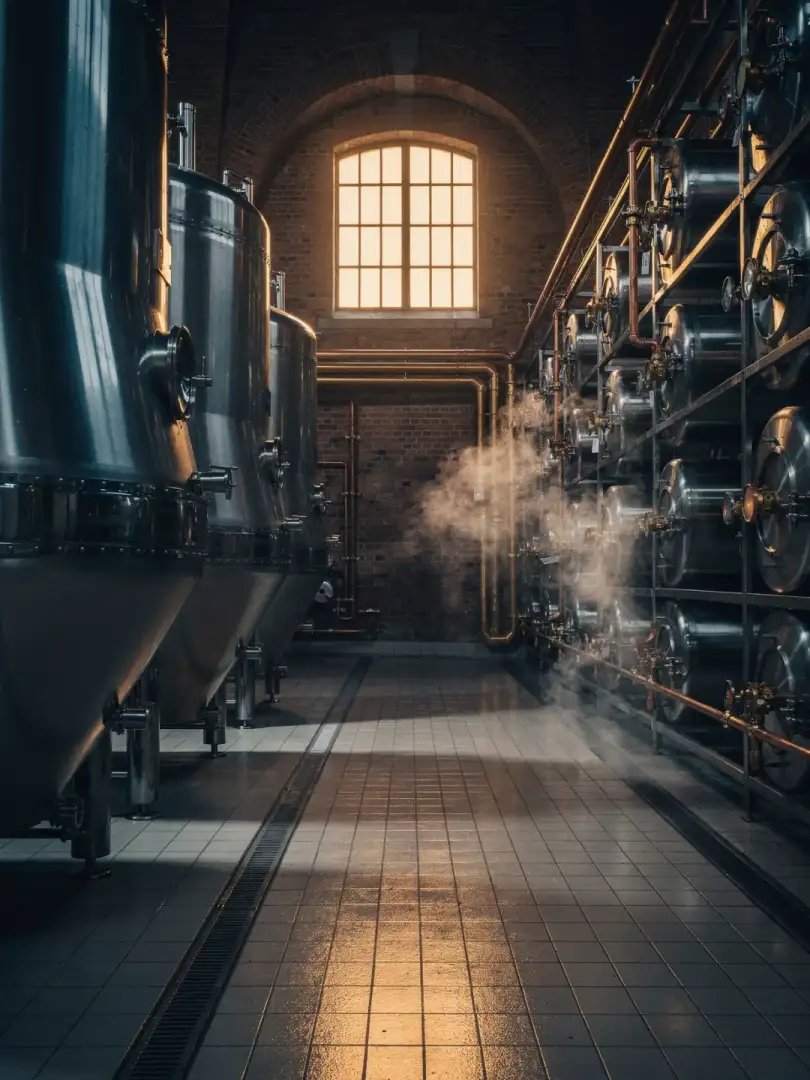
In Stuttgart, nearly everything is bottom-fermented. The yeast works at cool temperatures, around eight to twelve degrees Celsius, and settles at the bottom of the tank once fermentation is complete. The result is a clean beer free of fruity side notes, letting malt and hops take center stage.
Bottom-fermenting yeast, now generally classified as Saccharomyces pastorianus, is a hybrid of two fungal species. It was first isolated in pure culture in 1883 in the laboratory of Denmark's Carlsberg brewery, by Emil Christian Hansen. Since then, breweries have been able to cultivate and pass down their yeast strains with precision.
Primary fermentation is followed by lagering. During this stage, the young beer matures in the cold for several weeks: yeast and sediment settle out, sulfur notes dissipate, and carbonation binds into the beer. The higher the original gravity, the longer the beer is given to rest. That's why Festbier is aged longer than Pilsner. Exactly how long is a decision each brewery keeps to itself.
Stuttgart's specialty is Zwickelbier, from Dinkelacker-Schwaben Bräu. The name originally referred to the unfiltered sample a brewmaster would draw straight from the lagering tank through a small tap called the Zwickelhahn. Today, Schwaben Bräu bottles its Zwickl as a naturally cloudy beer, with yeast and protein particles that give it visual haze and a fuller mouthfeel.
Open fermentation vessels, wooden casks, or spontaneous fermentation play no role in the region's flagship beers. The closed steel tank in the fermentation cellar rules here, with temperature and timing precisely controlled. That's what gives Pilsner from this region its remarkable consistency, batch after batch.