Cold Fermenting, Resting
Yeast & Fermentation
The beers of the region ferment with bottom-fermenting yeast. That means the yeast works at cool temperatures and sinks to the bottom of the tank once its job is done. Top-fermenting yeast, as used for Kölsch or wheat beer, rises to the top instead and ferments at warmer temperatures. Around Lake Constance, Pils, Helles, and Kellerbier are the norm—in other words, lagers.
Why the cold? At low temperatures, the yeast produces fewer fruity byproducts, giving the beer a cleaner taste and letting the hops stand out more clearly. That's exactly what Pils and Helles are after, especially with a hop like Tettnanger. A fruity yeast would mask its aroma.
Incidentally, lager yeast is a hybrid of two species—a brewer's yeast and a wild yeast only identified in Patagonia in 2011. It was first isolated in pure culture in 1883 by the Dane Emil Christian Hansen in Copenhagen. The yeast he worked with had already been brought to Carlsberg from Munich in 1845.
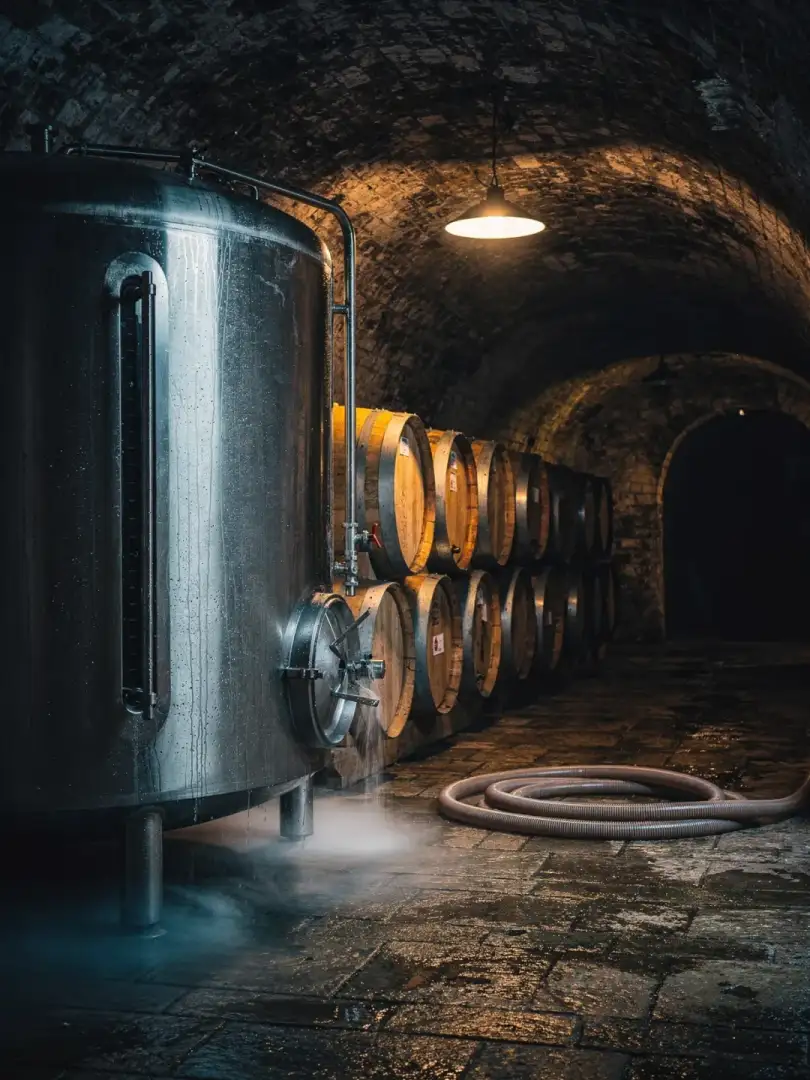
After primary fermentation comes lagering. The young beer matures for weeks at temperatures near freezing in the tank, becoming clear and well-rounded in the process. This is where the word "lager" originates. Exactly how long a beer rests at the lake is up to each brewery, and the times are usually not published.
A Kellerbier, by contrast, is often left unfiltered and so remains cloudy, tasting somewhat yeastier and softer. The name Keller-Pils shows that Tettnanger Krone applies this concept to a Pils as well. According to the brewery, the organic beer of the same name has been considered the first organic beer from Lake Constance since 1993.