Ice Age, Gravel, Lake
Water & Soil
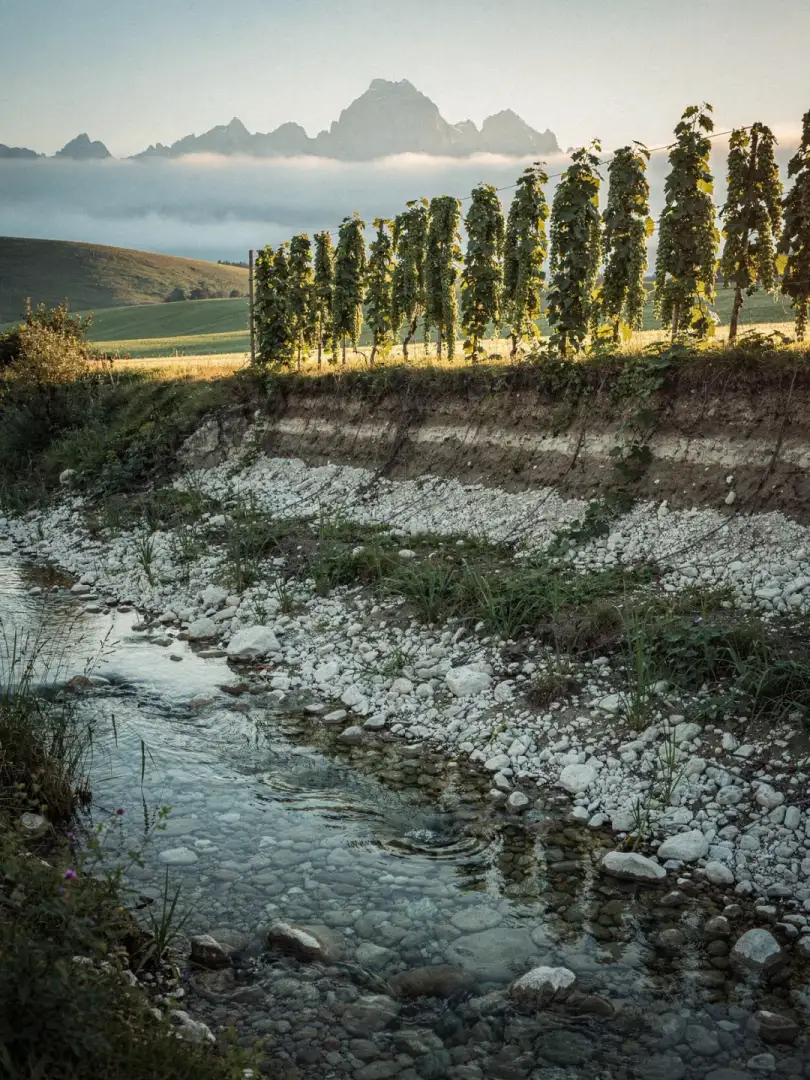
Tettnang hops grow on soil made of glacial remnants, and that tells you more about the region's beer than any water-hardness chart ever could. Around 10,000 years ago, the ice masses of the last Ice Age retreated into the Alps, leaving behind gravel and moraines, particularly in the Schussen Basin and along the Argen river.
Hops are cultivated on this low-terrace gravel, the young moraine deposits of the Würm glaciation. It's mostly sandy, lime-rich loam that allows roots to dig deep: according to growers, they can reach up to two meters into the soil. Hops are a climbing plant, and that kind of strength from below is exactly what they need.
Growers report that hop bines in Tettnang can reach up to 8.30 meters in height, compared to trellises elsewhere that typically run 7 to 7.5 meters. Soil, rainfall, and temperature are all considered favorable factors behind this growth.
Lake Constance acts like a natural buffer here. In winter, the lake stores warmth; in summer, it cools the air. Around 1,000 millimeters of rain fall each year, with about two-thirds of it arriving between April and August, exactly when the hops are growing.
And the brewing water itself? There's no reliable comprehensive overview of what water lakeside breweries actually use, so we'll stick to general principles here. Pale, hop-forward beers turn out best with soft, low-mineral water, the kind found in Pilsen. Nearly all breweries today treat their water anyway, softening it or adding salts as needed. So the character of the beer comes less from the well and more from the hop garden.