Pale Malt, Quietly
Malt & Grain
In a Tettnang Pils or Helles, the malt stays in the background. It provides the body and sweetness that let the hops lay down their aroma, and it's meant to impose as little else as possible. That's exactly why it's worth a closer look.
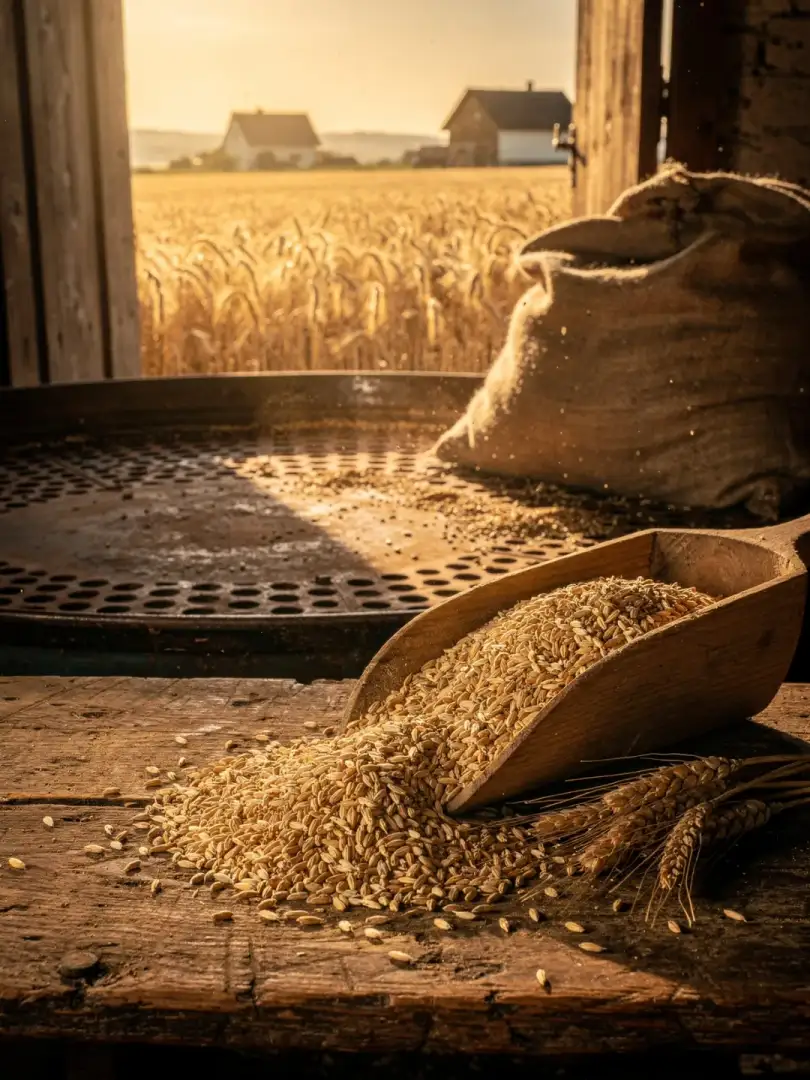
So what is malt, exactly? It's grain, usually barley, soaked in water and allowed to germinate. During germination, the kernel develops enzymes that later break down starch into fermentable sugar. After a few days, the maltster halts the process with heat, a drying step in the kiln known as kilning.
The duration and intensity of kilning determine the color. Pale beers call for gentle kilning, keeping Pilsner malt light in hue. According to the style guidelines of the Beer Judge Certification Program (BJCP), a German Pils falls between 4 and 8 EBC (the brewers' color scale), while a Helles sits between 6 and 10 EBC. Darker malts for a Dunkel, by contrast, need more heat.
Under German law, a bottom-fermented beer may only contain barley malt besides hops, yeast, and water. Wheat, sugar, or corn have no place in these styles. This rule applies equally in Baden-Württemberg and Bavaria, since it's written into federal regulations under the Beer Law.
Which maltster supplies the breweries around Tettnang isn't documented uniformly, and many only reveal the origin of their barley on request. Anyone wanting the full picture is best off asking the brewery directly. What's certain is this: here, malt is the stage, and Tettnang hops are the star of the show.