Fermented Cold, Lagered Long
Yeast & Fermentation
Despite its color, Schwarzbier is a bottom-fermented beer. The yeast works at low temperatures, usually around ten degrees Celsius, and settles to the bottom of the tank after fermentation. In top-fermented beers like Altbier, Porter or Stout, the yeast rises to the top and ferments warmer.
The result tastes different from what many expect at first sight. Cold-fermented yeast works cleanly, producing hardly any fruity secondary aromas. This keeps the note of malt and roast clearly in the foreground, and the beer comes across as smooth rather than bold.
The yeast behind bottom-fermented beers is called Saccharomyces pastorianus. It's a hybrid, a cross between the brewer's yeast Saccharomyces cerevisiae and a cold-tolerant wild yeast first described in Patagonia in 2011. So the parent strain existed long before anyone knew of it.
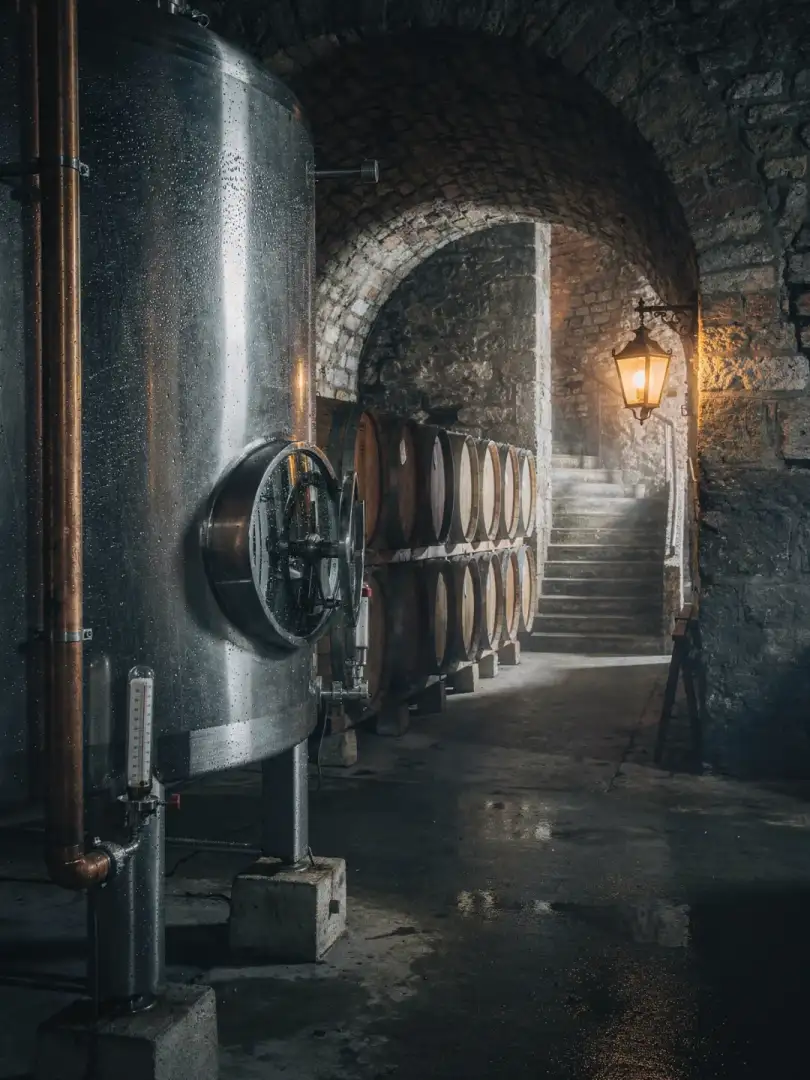
Fermentation is followed by maturation. The beer sits in lagering tanks at temperatures near freezing, usually for several weeks, clarifying as it rests. The word lager comes exactly from this—from lagern, to store—and applies to all bottom-fermented beers, whether pale or dark.
Lagering used to take place in cellars where brewers stored winter ice. Today, refrigeration units handle that task. Like any lager, Köstritzer counts on time, only now the cold is on a schedule. Exact fermentation temperatures and lagering periods for individual breweries are given by the breweries themselves. Anyone drinking Köstritzer Schwarzbier from Bad Köstritz is tasting this craft of patience: cleanly fermented, long matured, brought to the glass without haste.