Limestone and Cellars
Water & Soil
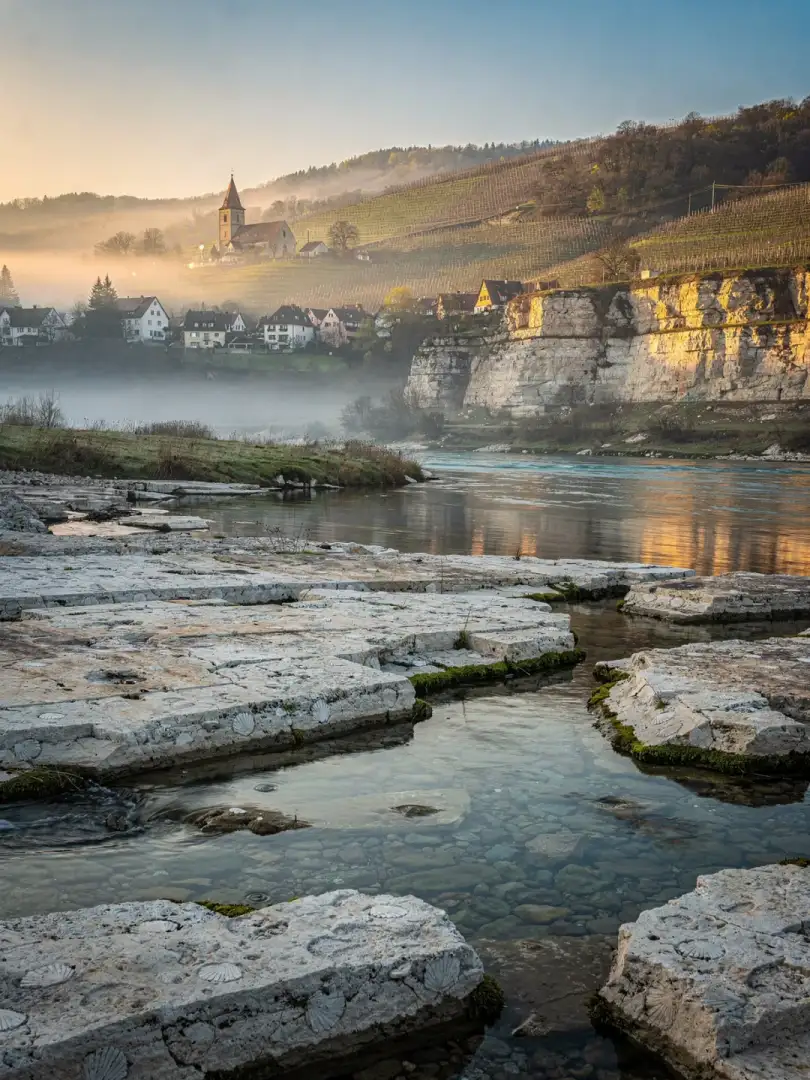
How hard is the water that goes into Würzburg's beer? The breweries haven't published exact figures, but the geology points the way. The Maindreieck sits on shell limestone, a type of rock formed in a Triassic-era sea, and that same bedrock underlies the region's famous vineyards.
Rainwater percolating through limestone picks up carbonate and becomes hard. Water hardness indicates how much calcium and magnesium is dissolved in it. By old brewing lore, such water suits darker malts better, while soft water favors pale, hop-forward beers. With very hard water, hop bitterness can come across as harsh. How the region's breweries treat their water today isn't documented, though nearly all operations adjust their water in some way, whether by softening it or adding salts.
The Main was more than a source of water. It carried the barrels: the riverside location helped Kitzingen sell its beer far and wide in the 19th century. The town's brewhouse didn't have to haul materials far either, since water, barley, and markets all lay close together.
Mainfranken is one of Bavaria's warmer regions, and summers here get hot. That's a problem for a bottom-fermented beer, since lager yeast only works cleanly in the cold. Brewers needed cool cellars. Wine has aged in deep vaulted cellars here for centuries, as at the Bürgerspital, and beer follows the same principle: the cooler the space, the slower and clearer the maturation. You can taste the result: a beer from a cold cellar comes across calmer, rounder, and less fruity than one fermented warm.