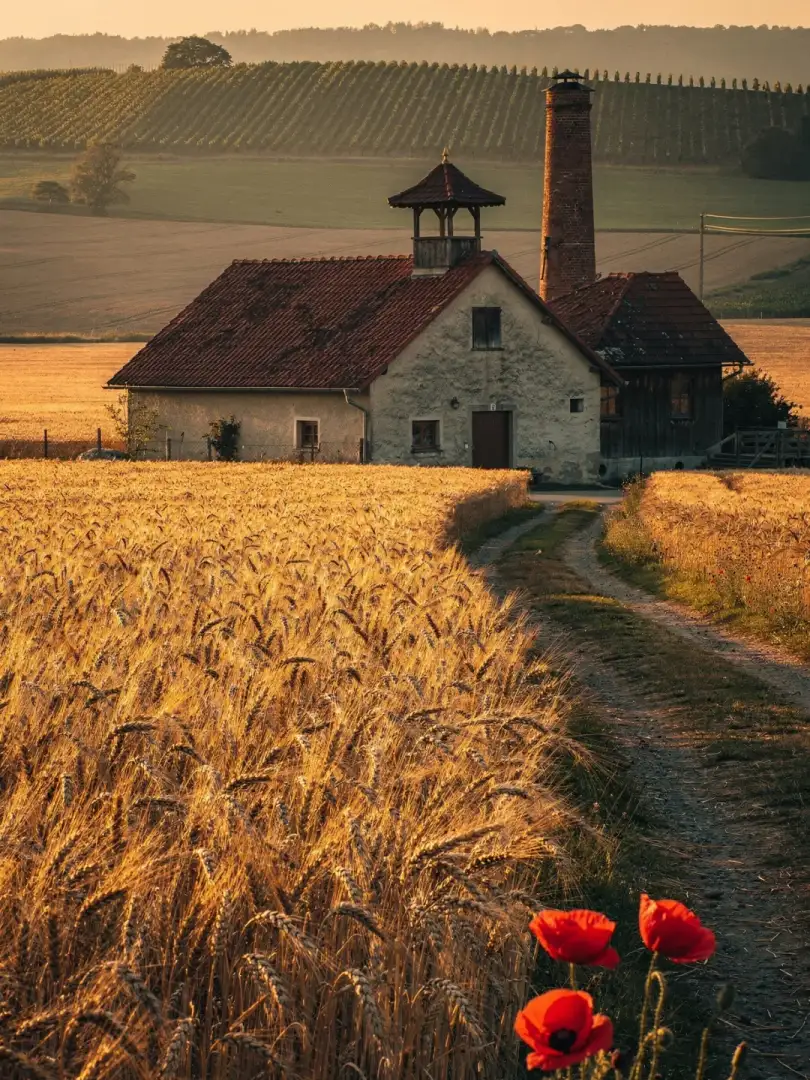
Barley in the Maindreieck
Malt & Grain
What grain goes into Franconian beer? Barley, grown on fertile land in the Maindreieck and turned into malt. To make it, the grain is germinated and then dried so the starch inside remains usable for brewing. This drying process is called kilning.
The hotter and longer the malt is kilned, the darker and more roasted it tastes later. Pale Pilsner malt brings bread crust and a touch of honey to the glass, while darker Munich malt leans more toward biscuit and caramel. In Bavaria, the Reinheitsgebot applies to top-fermented beers too, meaning no sugar.
The exact malt blends used in Würzburger Hofbräu's beers are a trade secret. The team behind Mainfranken Bier, by contrast, states that they use only regional raw materials. That's a claim from those involved, not something verified by a third party.
The difference between styles also comes down to the malt. A Helles needs almost entirely pale malt, aiming for a taste of bread and grain. A Festbier is brewed with more malt, giving it more body and a touch more alcohol, while staying golden in color. A dark beer calls for kilned, deeper-colored malts. How much of each goes into a particular Franconian brew is ultimately the brewmaster's call.
Barley is usually malted at a dedicated maltings, not at the brewery itself. There it's steeped in water, left to germinate for a few days, and growth is halted with hot air. Which maltings supply the region hasn't been publicly listed by the breweries.