Communal brewing tradition
Region & History
What is Zoigl? In the northern Oberpfalz, the word refers to a bottom-fermented, unfiltered beer brewed not in a factory but in the village's communal brewhouse. Five towns keep this way of brewing alive to this day: Eslarn, Falkenberg, Mitterteich, Neuhaus and Windischeschenbach.
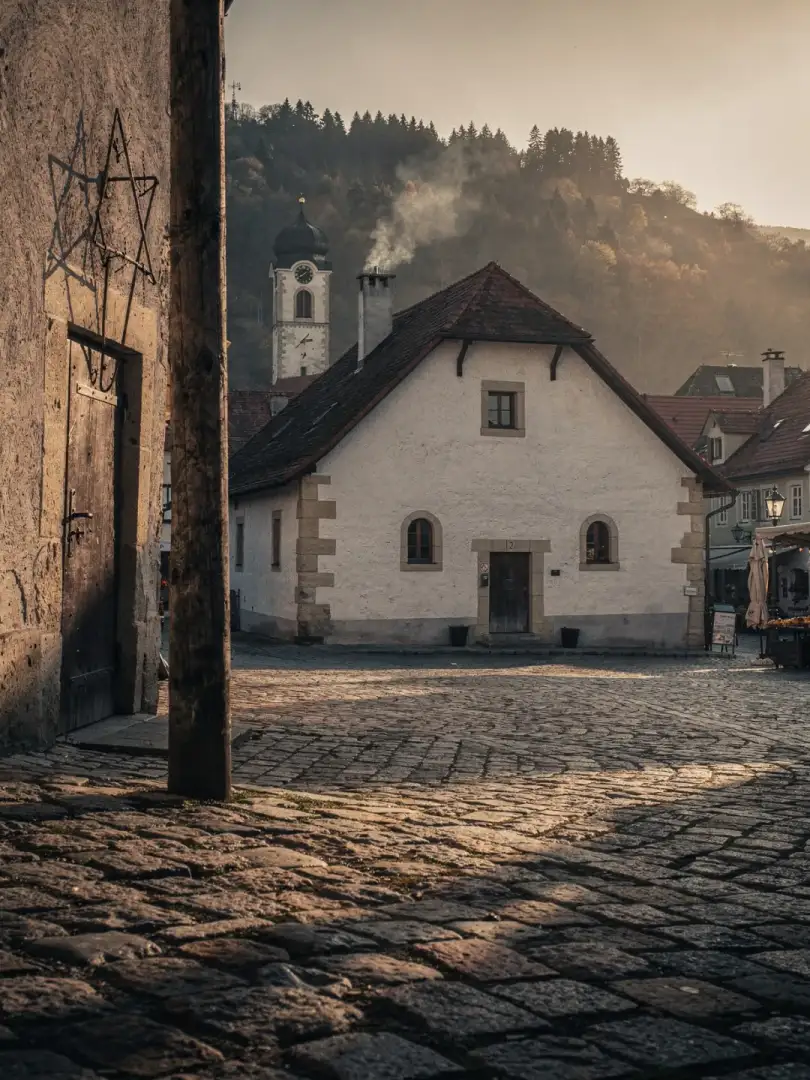
The name comes from the word for 'pointer' or 'sign'. Whoever is serving their beer hangs the Zoigl star on a mast outside the house, a six-pointed star made from two interlocking triangles. Once the barrel runs dry, the star moves on to the next person with brewing rights, known locally as a Rechtler.
Communal brewing is a medieval idea. The town owns the brewhouse, and every citizen with brewing rights gets to use it in turn. This worked out far cheaper than everyone building their own brewing setup. The earliest records of Zoigl culture in the Oberpfalz point to Neuhaus and the year 1415.
Communal brewhouses once existed elsewhere in Bavaria too. In the northern Oberpfalz, five of them have survived, and the Rechtler still brew there themselves, batch by batch and in rotation, rather than handing the whole business over to a large brewery.
The fact that there are five towns rather than one explains why you can hardly speak of 'the' Zoigl. It's a shared product of several villages, each with its own brewhouse and its own rotation of Rechtler. These aren't breweries in the usual sense, with a company name, bottling, and distribution.
Since 2018, 'Oberpfälzer Zoigl culture' has been listed in Germany's national register of Intangible Cultural Heritage with the German UNESCO Commission. Unlike some other beers, Zoigl doesn't have EU protected designation of origin status and isn't listed in the EU register. Its bond to the place lies in the brewing method and the calendar, not in a seal.