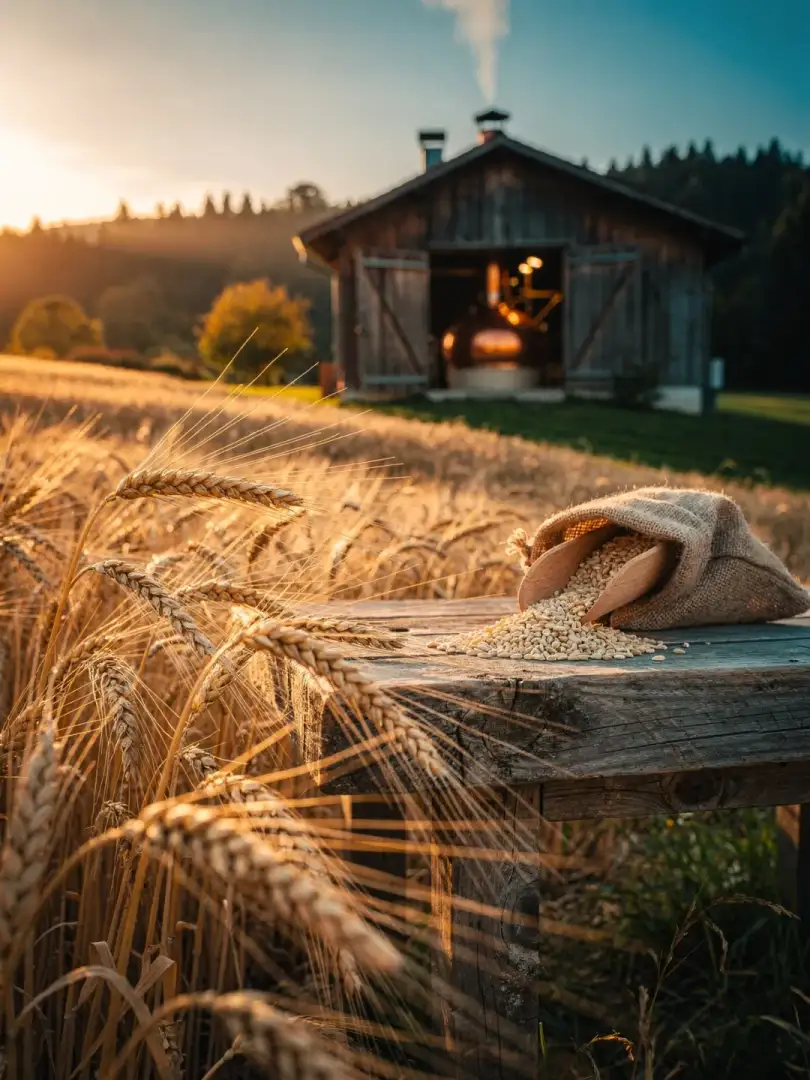
Mash in the kettle
Malt & Grain
In the communal brewhouse, Zoigl starts with malted barley. The grain is moistened and allowed to germinate so its starch can later convert into fermentable sugar, and the germination is then halted by kilning, a gentle drying with warm air.
How light or dark the malt is kilned determines the color of the Zoigl. Depending on the house, it ranges from golden yellow to a warm amber, and the darker the kilning, the more bready and caramel-like the beer tastes. There's no fixed Zoigl standard for color.
Traditionally, brewing takes place in an open kettle over fire. During mashing, the temperature is raised in steps so the malt's enzymes can break down the starch. The wort, the sugary liquid before fermentation, is then strained from the spent grain, the husks and leftover malt.
After that, the hops go into the kettle and the wort boils. The whole process takes half a day or more and needs several hands, which is why brewing in the communal brewhouse remains a shared effort to this day.
Wheat, rye, or sugar have no place in the brew. It's made with barley malt, hops, yeast, and water, and in Bavaria that classic list of ingredients applies to bottom-fermented beers anyway.
Whether a house prefers lighter or darker malt shows in the beer itself, not in its name. The maltsters supplying the brewhouses aren't documented here either. In the end, what matters most is the brewing itself: a craft each Rechtler family carries out a little differently, and it's these small variations that give the beer its appeal.