Baker's yeast, unboiled
Yeast & Fermentation
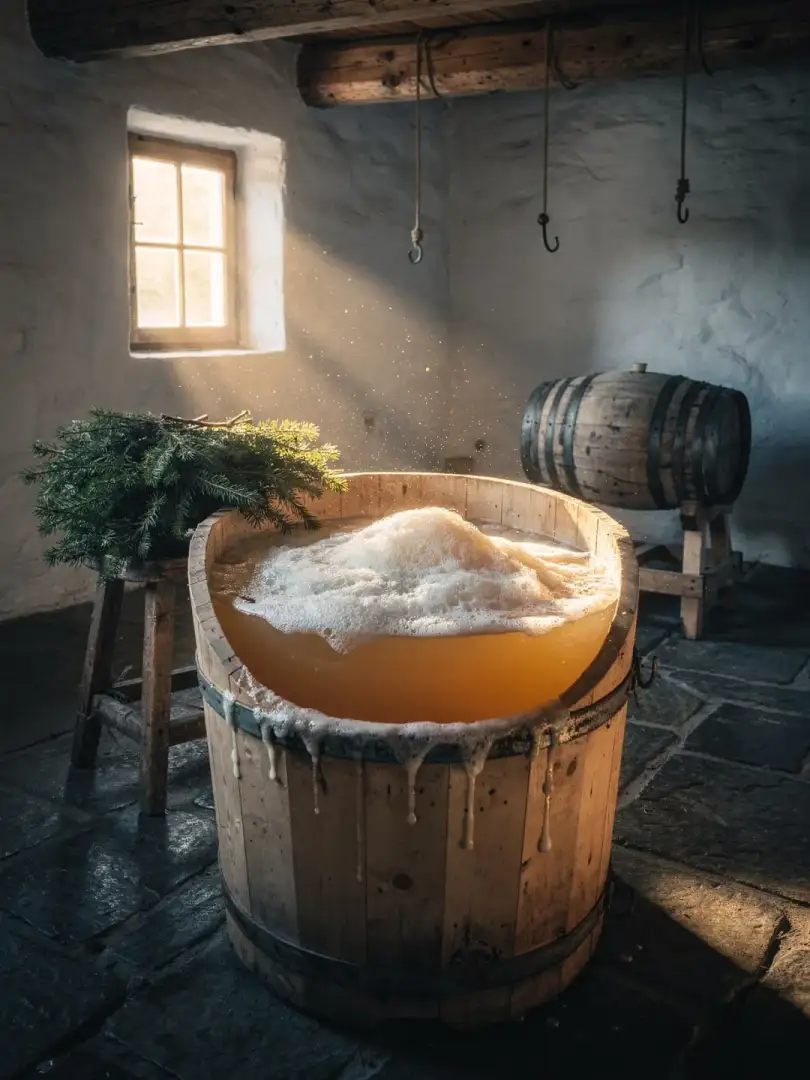
Koduõlu ferments top-down, meaning the yeast collects at the top of the vessel once fermentation finishes. What's special is what happens beforehand: nobody boils the wort. After lautering, it's cooled and then "pitched," as brewers say when yeast is added to the wort.
The old farmhouse yeast strains of the islands are extinct. Anyone brewing Koduõlu today uses baker's yeast or brewer's yeast from a packet. According to Garshol's accounts, yeast was traditionally added at body temperature—as warm as skin. At that warmth, yeast works fast and produces plenty of fruity flavour compounds called esters. A distinct banana note is typical.
Primary fermentation takes only two to four days. After that, the beer continues to mature in the cask and carbonates only lightly, since any carbon dioxide comes solely from fermentation in the container. Because of this short timeframe, the beer is young and cloudy, still carrying yeast and protein in suspension.
Since the wort is never boiled, it stays unprotected against wild microbes. That's why farms brewed often and in small batches, drinking the beer within a few days. Long ageing was never an option—a cask would be empty after a single celebration.
In modern breweries, fermentation is carefully controlled. Style guidelines for Baltic Porter usually call for bottom-fermenting yeast, though some use top-fermenting strains too. Põhjala ages parts of its beers in barrels, according to the brewery sometimes in wood that previously held other drinks.