Farmhouse beer from Häme
Region & History
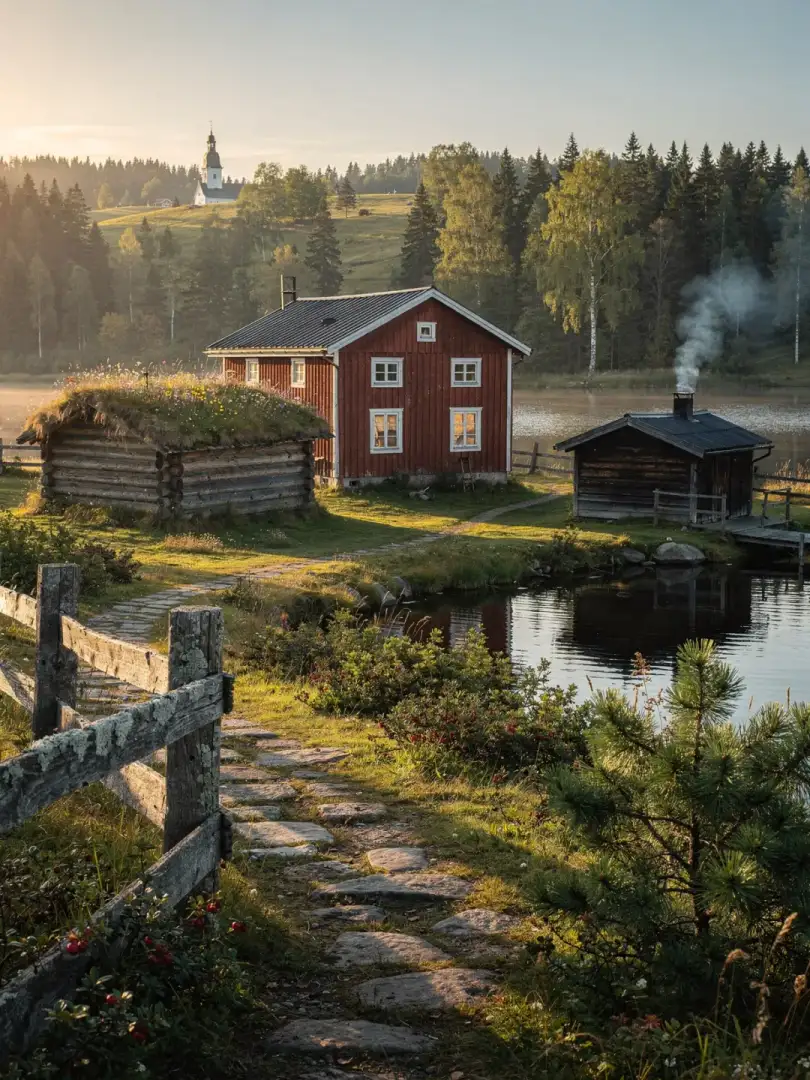
Where does Sahti come from? From the old region of Häme, known in Swedish as Tavastland, a landscape of lakes and forests a few hundred kilometers north of Helsinki. Together with the neighboring region of Satakunta, Häme forms the so-called Sahti Belt, and places like Lammi, Sysmä, Joutsa, and Kuhmoinen are considered the heartland of the beer.
Sahti was brewed on the farm, not in a town. It belonged to weddings, baptisms, and harvest festivals, and whoever hosted a celebration brewed it themselves. Guilds, brewing rights, or monastery breweries like those in Central Europe didn't exist in this tradition. Knowledge passed from farm to farm and from parents to children.
For a long time, Sahti remained a drink you'd sample at a neighbor's house and could hardly buy anywhere. That changed late. The Lammin Sahti brewery in Lammi, now part of Hämeenlinna, was founded in 1985 and has been brewing Sahti since 1987. It's considered Finland's first modern Sahti brewery.
Today only a handful of commercial brewers exist. Beer writers count around seven operations specializing in Sahti, plus countless home brewers. The Suomen Sahtiseura, the Finnish Sahti Society, along with local associations, holds competitions for the title Sahtimestari, or Sahti Master. The winner receives a traveling trophy, a traditional wooden Sahti hat, and sacks of malt.
The name Sahti has been registered in the EU as a Traditional Speciality Guaranteed (TSG) since 2002, similar to Belgian Lambic. This protection isn't tied to a place but to the method and ingredients, so a Sahti could technically be made outside Häme too. Whether the registration remains unchanged following the 2023 revisions is unclear; the UK register still lists Sahti.