Lakes & Sand Ridges
Water & Soil
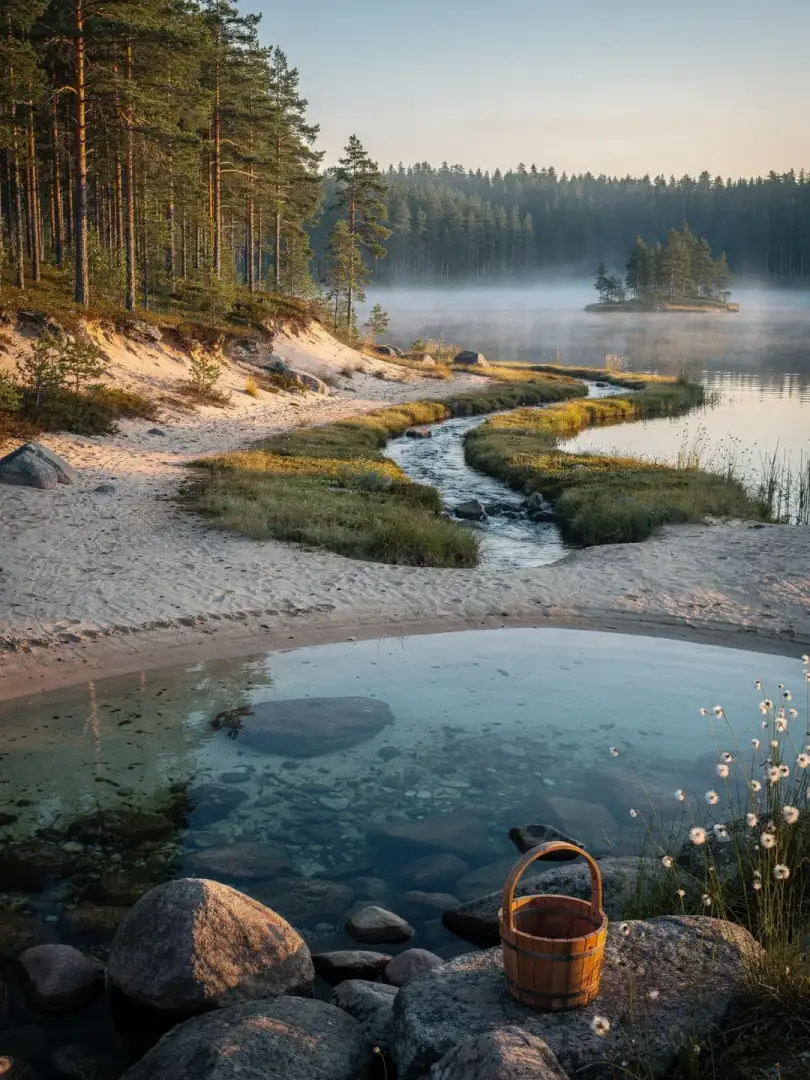
Between Lammi and the Päijänne, one of Finland's largest lakes, Häme is a region full of water. Small lakes, bogs, and streams shape the landscape, with sand ridges left by the Ice Age running through the forest. Many old farms sit on these ridges, since the soil there is dry and the groundwater clean.
How hard is the water in Finland? Mostly soft, since the bedrock consists of hard ancient rock and sand, allowing little lime to enter the water. That's the rule of thumb for the region. Precise hardness values for individual wells or breweries can't be given across the board, as they depend on the farm and the well.
Soft water lets malt and juniper shine through unobstructed. It doesn't emphasize bitterness the way mineral-rich water does, which is an advantage for a beer that contains almost no hops. The sweetness of the wort and the resinous character of the juniper take center stage.
Water also plays a role elsewhere in Sahti brewing. During lautering, the separation of the liquid wort from the solid grain remains, hot water flows through the mixture of mash, straw, and juniper branches. Depending on the farm, water is added again several times, and with each pass the wort becomes thinner. The first runnings are the strongest.
Sahti doesn't age well. It has no deep cellar, no months spent in a tank; instead it's drunk young, and a cool room on the farm is all it needs. Häme's climate, with cold winters and short, warm summers, once forced farmers to use up their beer quickly.